The Non-Existent BMW Model Naming Convention
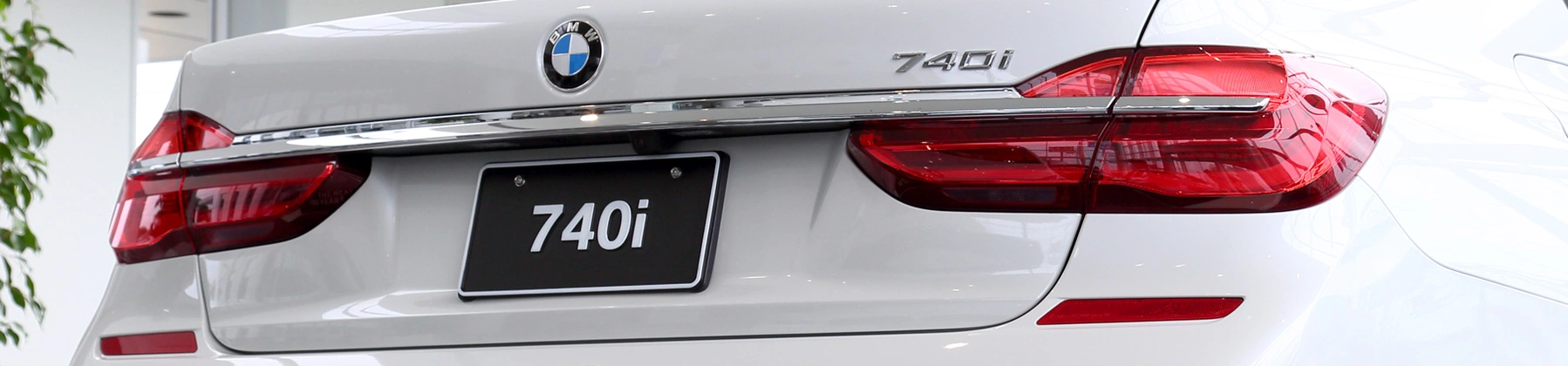
Although BMW officially stated on their website for more than four years (2021–2025) that "BMW has a long tradition of following a clear naming convention", reality could not be further from the truth. Perhaps they eventually realised that in Munich, as they quietly deleted the entire page in 2026. Either way, let's now take a look at why BMW has had such a fundamental long-term problem maintaining even basic consistency in the names of their cars.
Before we dive into history, let's get our terminology straight. BMW uses a marketing model name primarily to sell cars. These are the letters and numbers often found on the boot lid: 745i, M550d, 318is… These models are then grouped into series. But very often we also encounter so-called chassis codes — E30, E65, F11, G20, etc. These are internal body codes that distinguish cars bearing the same 'name' but technically and conceptually completely different. Without them, we'd get lost trying to identify which car we're talking about even when specifying the year. For example: "BMW 320i (1998)" could be either an E36 or an E46 — two entirely different vehicles.
To set things straight from the start:
- Marketing model name: 735i, M550d, 318is…
- Chassis code / body code: E30, E65, F11, G20…
- Series: 1-series, 7-series, X5-series, i-series…
So when someone says "BMW 530d E61", we know for certain that it's a 5 Series Touring (estate) produced between 2003 and 2010 with a three-litre diesel engine. Simple, clear, reasonably precise. Unfortunately — as we'll see shortly — this only holds true for roughly 25% of all BMWs produced and named since 1972. Yet this notion that you can identify both the engine and body style from the name has become firmly embedded in people's minds, fuelled by untruths from BMW themselves.
From History: How BMW's Naming Conventions Actually Changed
1927–1934 – The */** PS naming system
BMW was founded during the First World War. The official founding date of Bayerische Motoren Werke AG is 7 March 1917, when the original company Rapp Motorenwerke was renamed. During this period, the company specialised in the production of aircraft engines, which formed a key part of the German war industry.
After the war ended, however, Germany was struck by the Treaty of Versailles, which among other things prohibited it from manufacturing aircraft and aircraft engines. For BMW this meant the immediate loss of its primary programme and market. The company was therefore forced to quickly reorientate itself and find new areas where it could put its technical know-how in combustion engines to use.
In the first post-war phase, BMW produced industrial engines, marine drives, compressors and other technical equipment, but these activities did not generate sufficient profit or long-term stability. The decisive step came with entry into motorcycle production in 1923, when BMW introduced its first own machine, the R32. The motorcycles proved technically accomplished and reliable, building BMW a strong reputation — but economically they kept the company afloat rather than making it significantly wealthy.
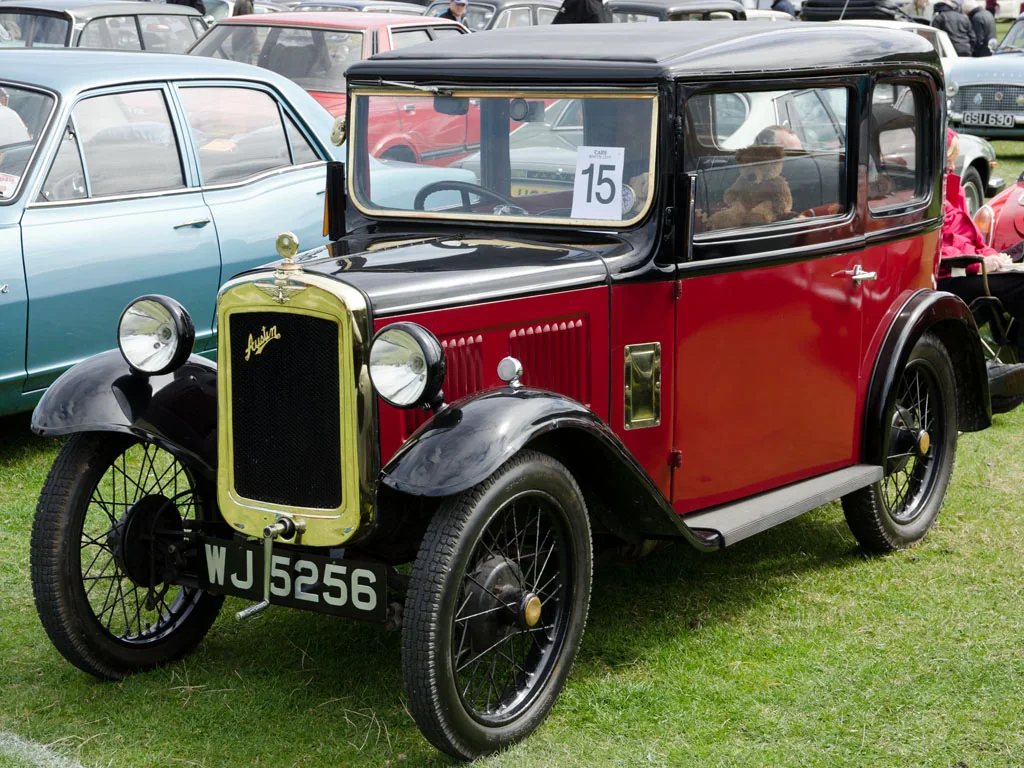
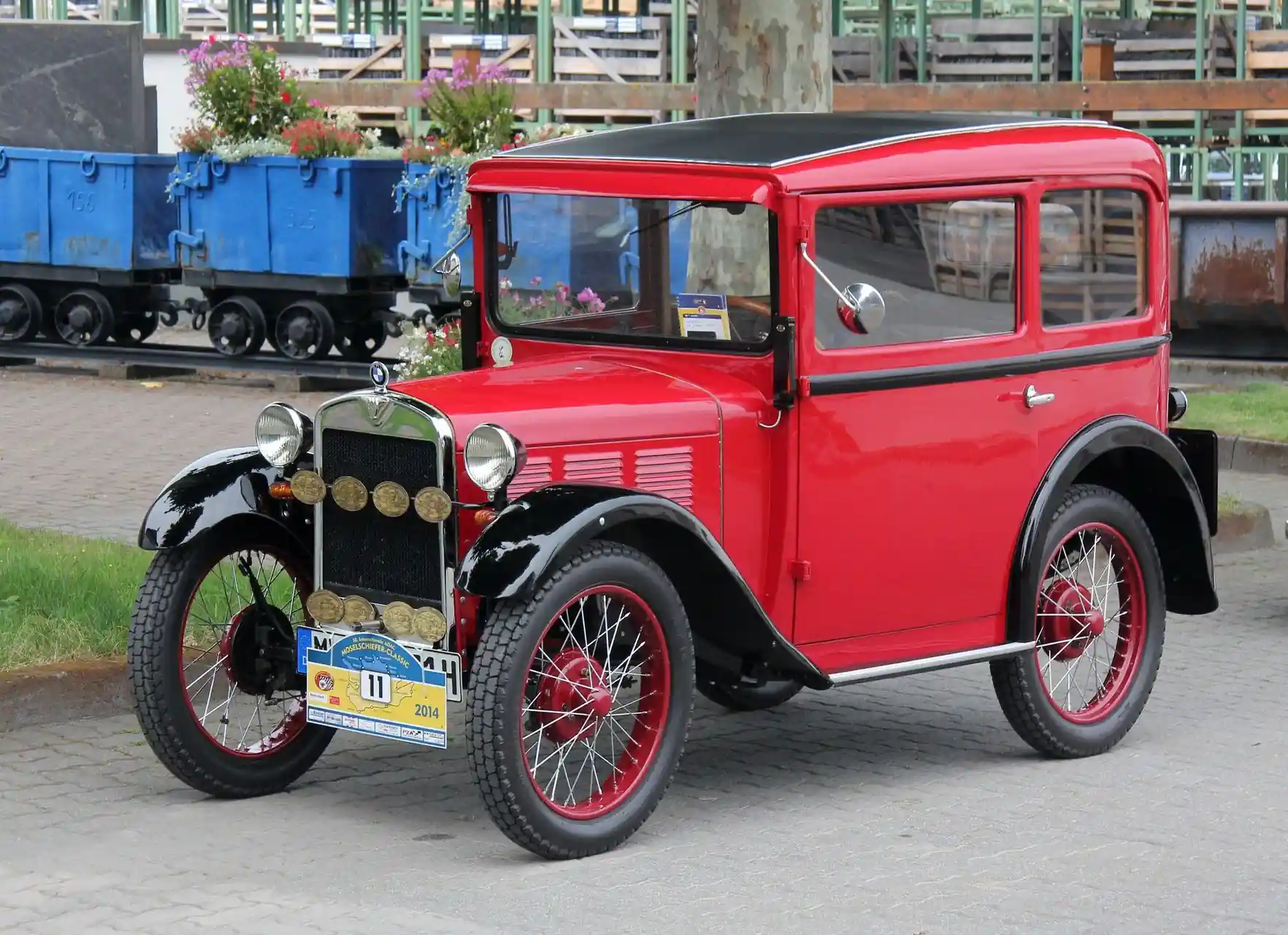
Even that was not enough in the long run. After approximately five years of motorcycle production, in 1928, BMW decided to enter the automotive industry. BMW's first automobile was not its own design, but a licensed copy of the British Austin 7, sold under the name BMW 3/15 PS. This car was originally produced under the Dixi brand, named after the factory in Eisenach.
The Dixi-Werke AG factory had been producing licensed Austins earlier, but financial difficulties led to its sale. In November 1928, BMW acquired it and renamed it BMW Factory Eisenach, thereby gaining not only manufacturing capacity but also an immediate entry into automobile production without needing to develop its own car from scratch.
The British brand Austin is known today primarily for the legendary Austin Mini of the 1960s, but for BMW the Austin 7 licence represented above all a pragmatic and necessary stepping stone. It allowed the company to survive the difficult interwar period and gradually transform itself from a maker of engines and motorcycles into the car manufacturer we know today.
BMW's first car thus bore the designation BMW 3/15 PS, which had a very straightforward meaning: the number 3 indicated the taxable power output and the number 15 the actual power output, followed by the power unit PS — an abbreviation for "Pferdestärke", meaning horsepower. In the post-war 1920s, BMW used the simple formula "tax output/actual output + PS" for the first model. Various versions of this car received the suffix DA-1 through DA-4 (standing for "Deutsche Ausführung", i.e. German specification) — presumably an attempt to distinguish them from the original British Austin. Each DA number denoted a particular modernisation or body variant, even though it was still fundamentally the same car.
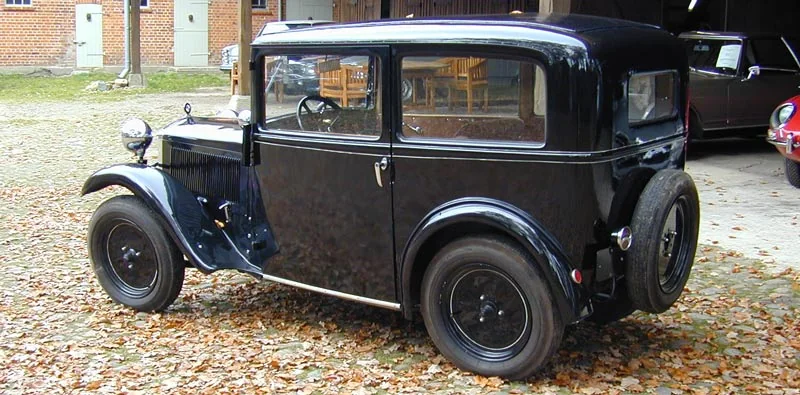
BMW's second model, the 3/20 PS, introduced in 1932, still followed this "*/** PS" convention — it was a continuation of the previous model, this time without the Austin licence, again with a designation combining taxable output (3) and actual output (20 PS). The car came with a different engine, a longer wheelbase and was offered in up to five different body styles. Interestingly, the bodywork was produced by the Daimler-Benz Sindelfingen plant, which is why it also appeared for sale at Mercedes dealers. This model featured the suffixes AM-1 through AM-4, standing for "Automobil München" (Munich automobile — to where production had moved from Eisenach). These denoted further revisions and variants as BMW progressively improved the car. The 3/20 PS was the last model to use this naming system; thereafter BMW abandoned the taxable/actual output naming convention.
1933–1952 – The 3** naming convention
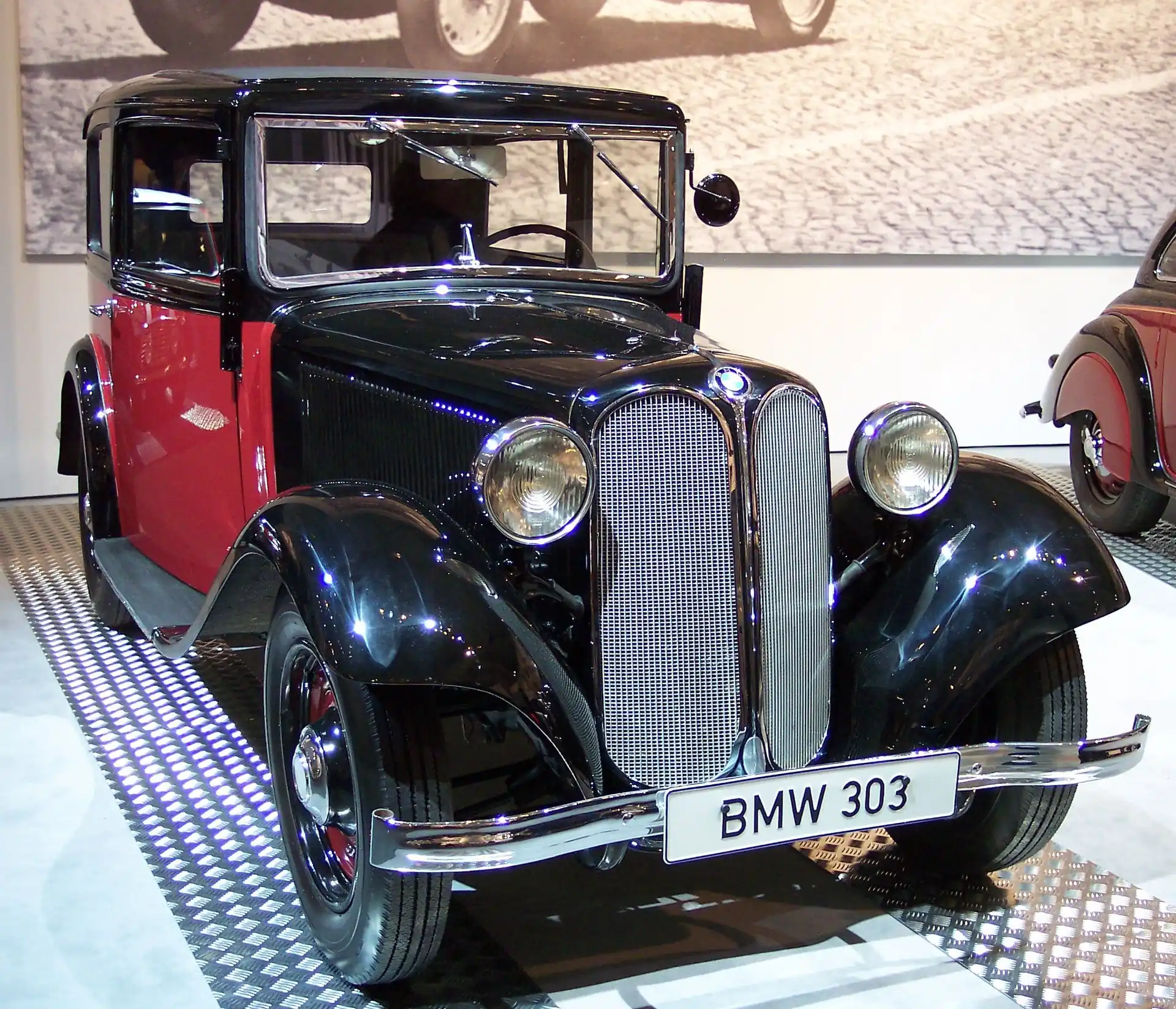
In the 1930s, BMW significantly expanded its portfolio again — alongside cars and motorcycles, it resumed aircraft engine production. The naming system therefore shifted to three-digit numbers, reportedly planned to distinguish different categories: for example aircraft engines in the range 100–199, motorcycles 200–299 and automobiles 300–399. Cars in the 1930s thus received designations such as BMW 303, 315, 319, 326, 329 etc. — three-digit numbers beginning with 3 (denoting a car) followed by two further digits.
Practice showed, however, that the numbers no longer unambiguously indicated output or displacement. For example, BMW 319 had a 1.9-litre engine, just as BMW 329 used a 1.9-litre six-cylinder — the digits "19" and "29" thus both referred to the same displacement. Conversely, BMW 303 was fitted with a much smaller 1.2-litre engine (it was BMW's very first inline six-cylinder, also with the smallest displacement ever produced), so the numerical designation 303 with "03" clearly did not correspond to a 1.2-litre unit.
In other words, in the 1930s BMW settled on the first digit "3" indicating the category (passenger car), while the remaining digits were not consistently tied to displacement or output — sometimes roughly corresponding to displacement (319 ~ 1.9 l), sometimes not (303 ~ 1.2 l). Nevertheless, this three-digit designation lasted until the early 1950s, even though the "300 to 399 for automobiles" system was ultimately not applied entirely strictly.
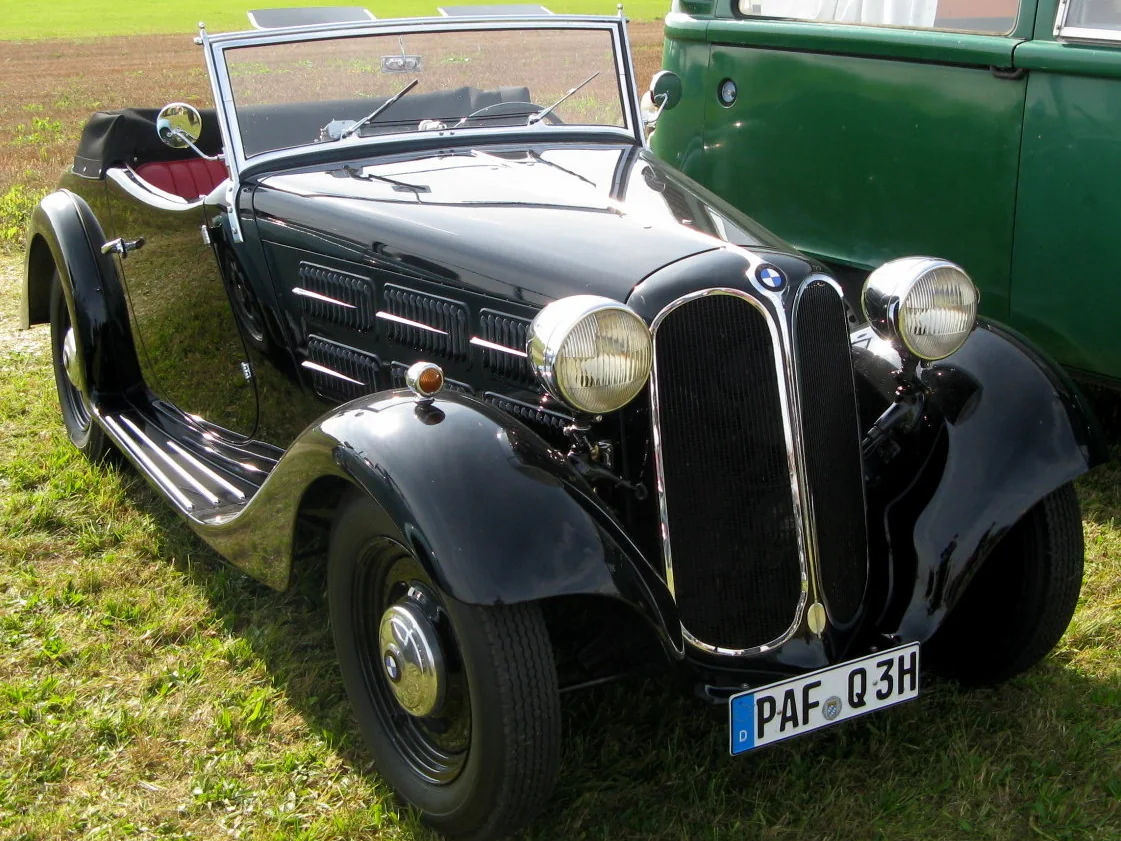
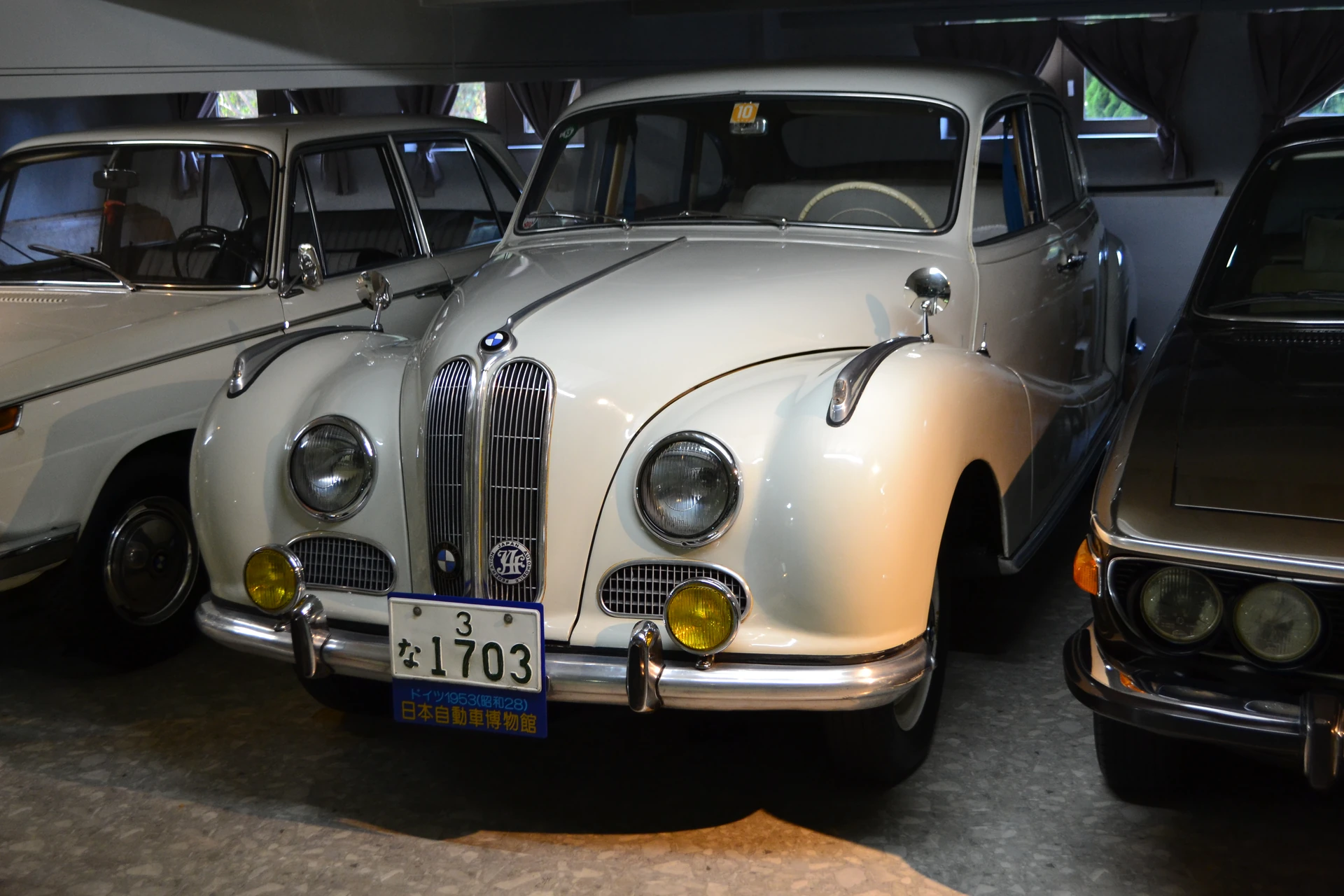
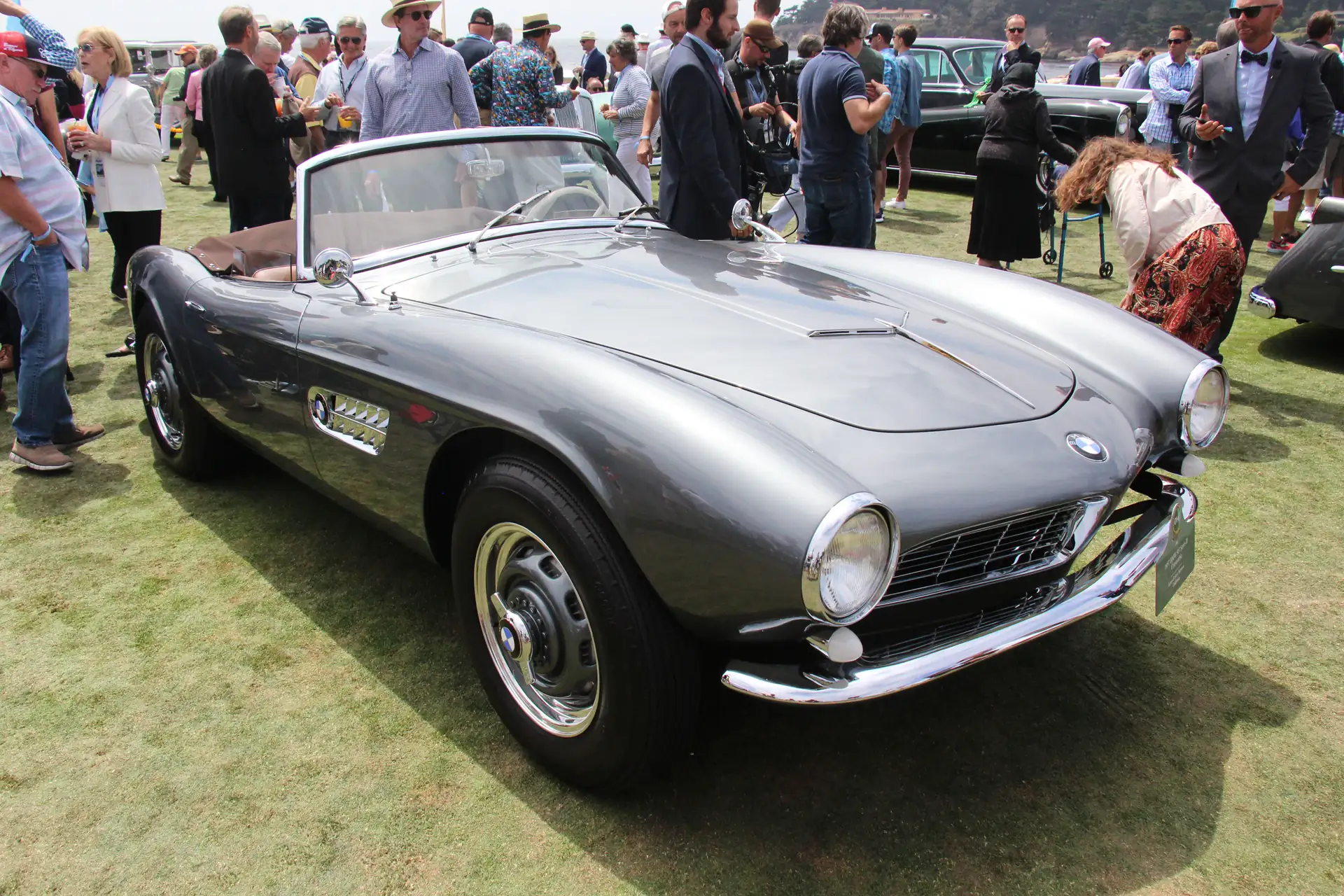
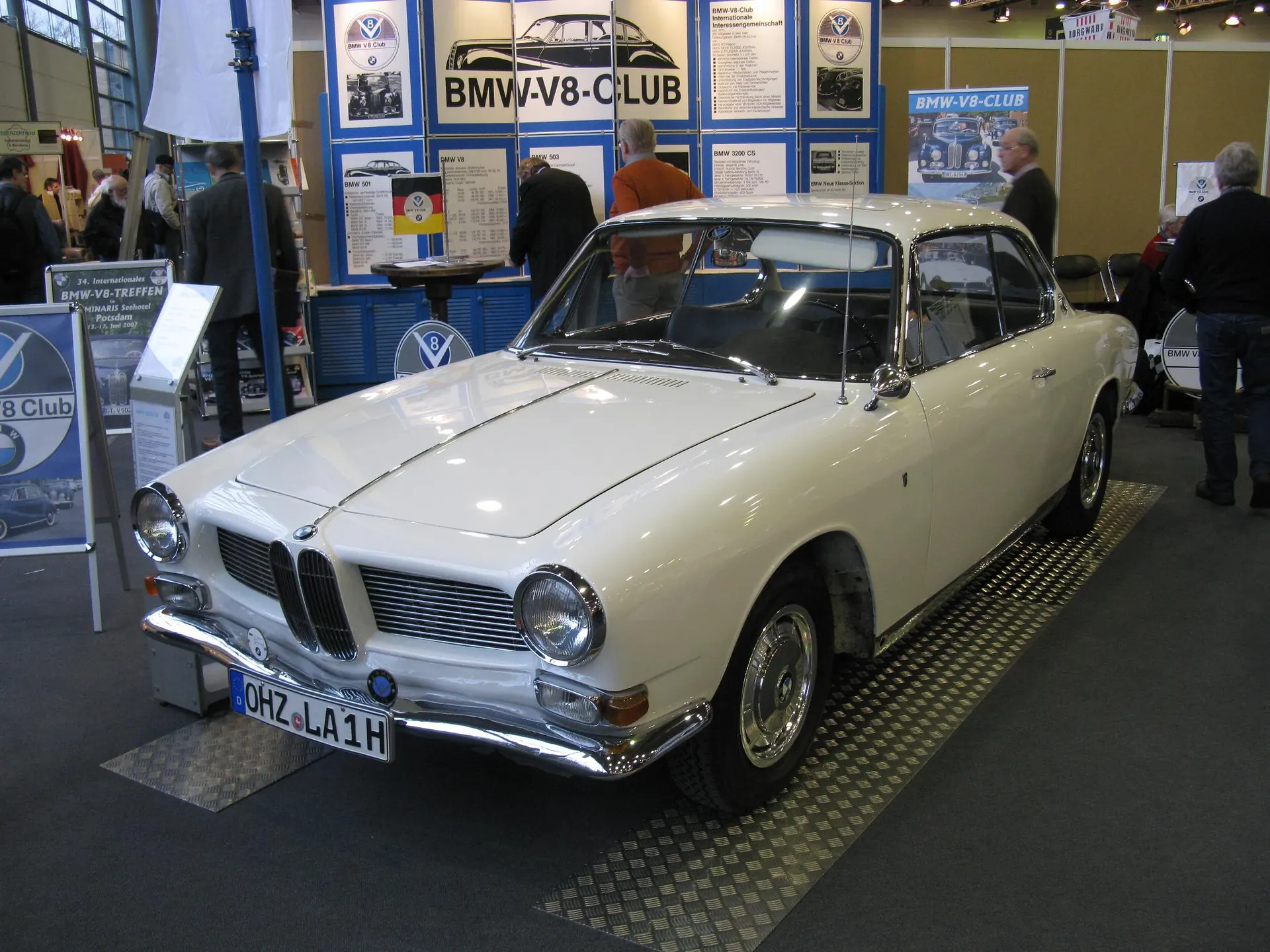
This period is also an important milestone for BMW from a design perspective, as the radiator grille shape was visually split into two parts. The reason was not brand identity — which emerged rather as a by-product — but the technical solution for airflow and cooling of the new six-cylinder engine. Thus BMW's characteristic "kidney grille" was born.
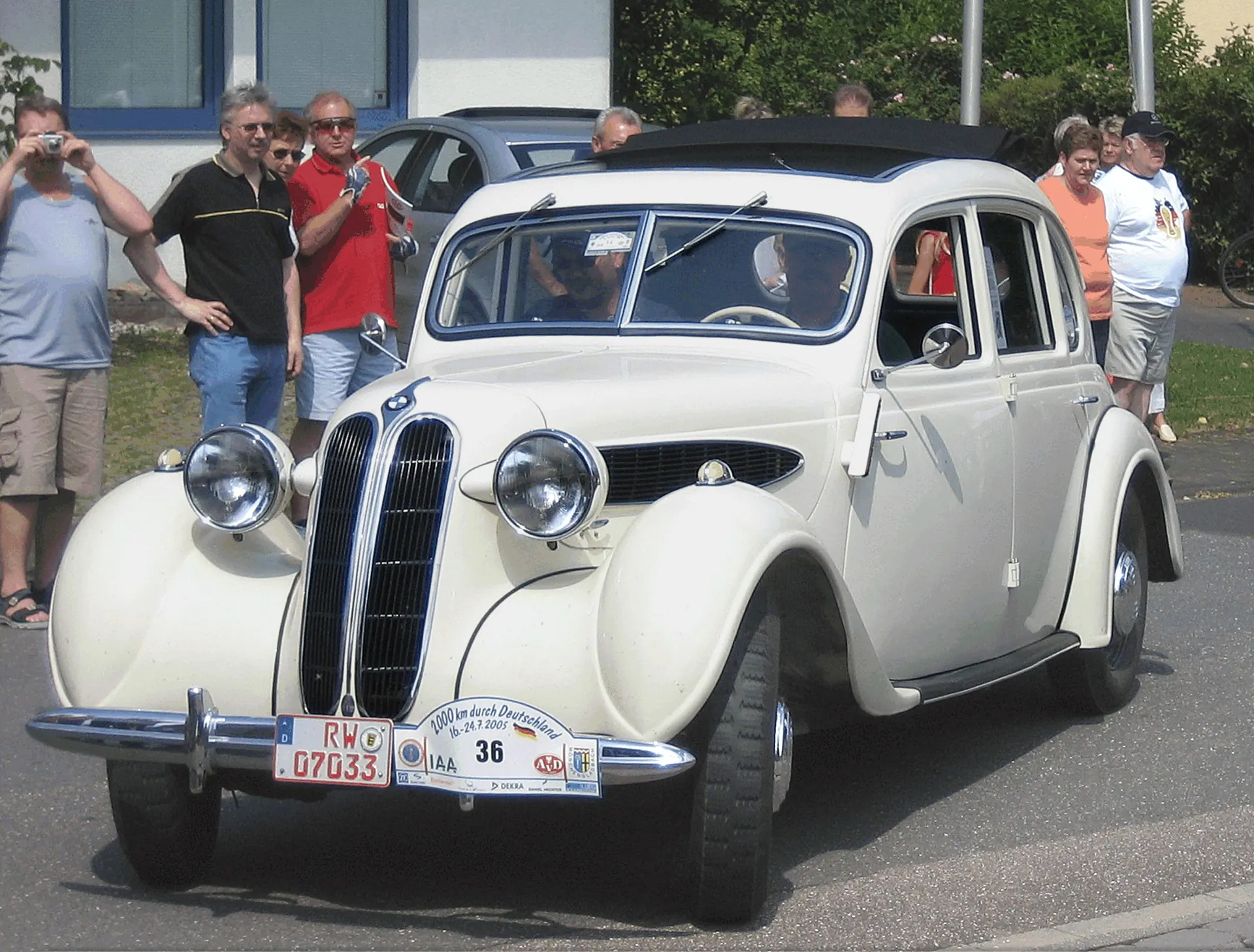
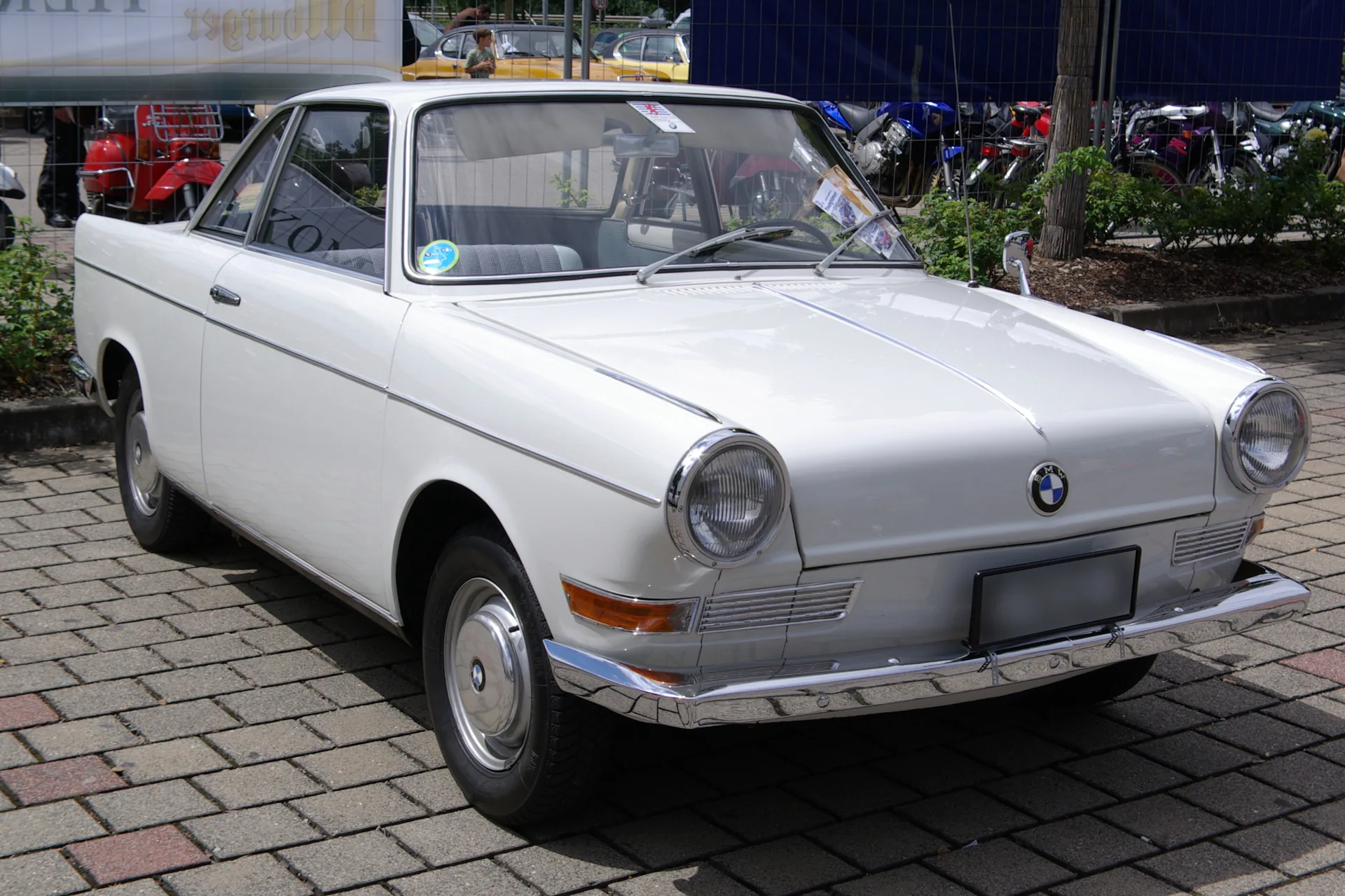
As can be seen in the photographs, the kidneys were originally large and the dominant feature of the front end — something that was gradually forgotten as they shrank over the years. BMW's absolute smallest kidney grilles appeared on the first 8 Series, the E31, in the early 1990s. After that, the size of the kidney grilles began to grow again, until at the turn of the 2020s they once again reached enormous proportions. Many people find this design direction unsatisfactory and refer to BMW having "always had smaller, more discreet kidneys". History, however, proves otherwise.
1952–1962 – A Chaotic Period Without a Unified Concept
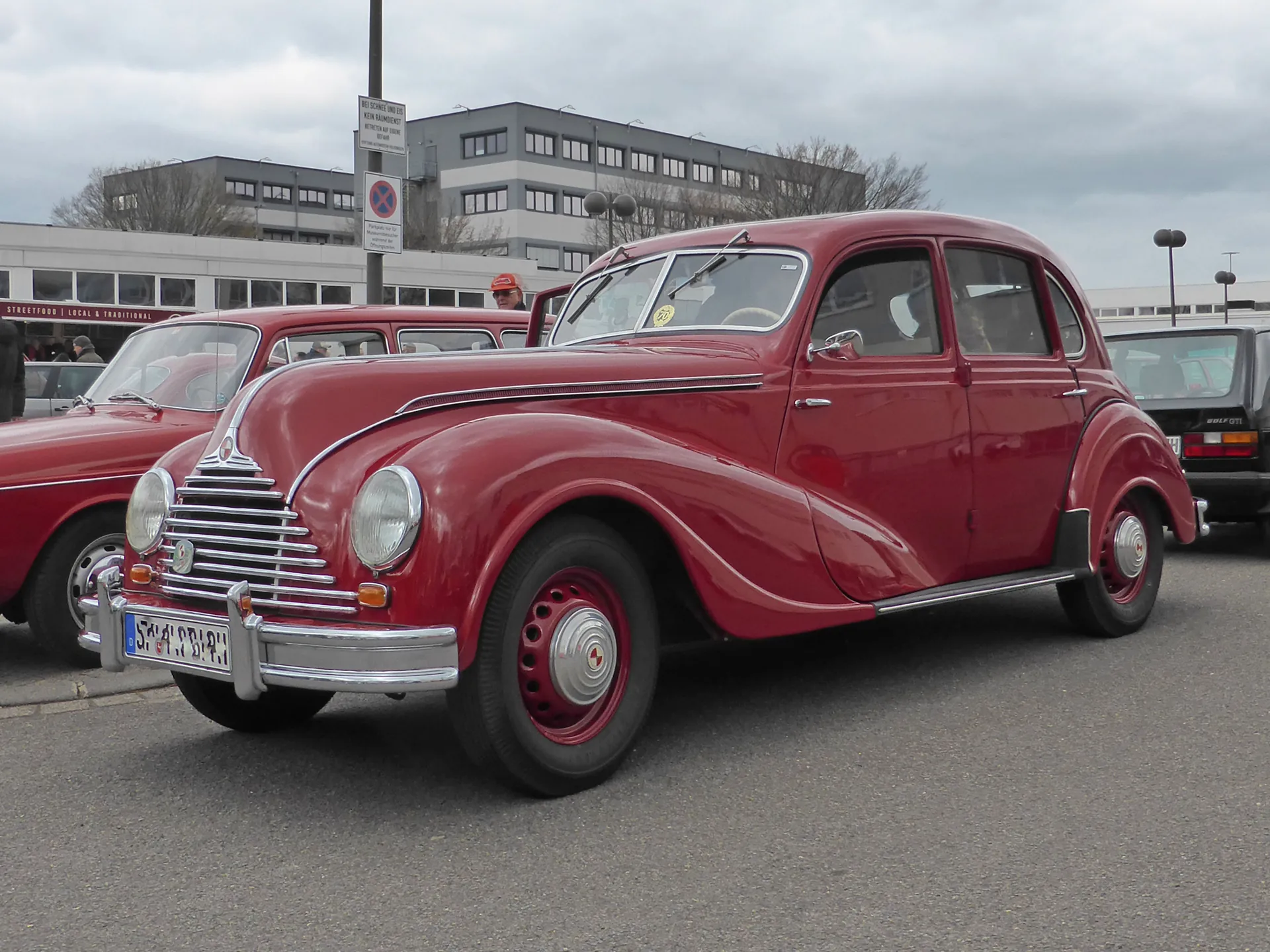
The mid-twentieth century brought the first significant confusion in BMW's model naming. After the Second World War, one of BMW's factories, located in East Germany, was nationalised. That was indeed the already-mentioned factory in Eisenach, where BMW automobiles were primarily produced. After nationalisation, cars were briefly still produced there under the BMW brand, but the factory was subsequently renamed EMW (Eisenacher Motorenwerk) and began using a red-and-white logo similar to BMW's — the result of legal disputes and a lawsuit from BMW.
The remaining BMW factories had been significantly repurposed for military production during the war, leading to restrictions, equipment confiscations and administrative obstacles that held BMW back until 1948 — three years after the war's end. The Eastern Bloc exploited this situation, and for example the BMW 340 — a saloon derived from the pre-war BMW 326 — continued to be produced and sold as the EMW 340. This car is considered the forerunner of the later East German Wartburg vehicles.
After 1950, BMW in West Germany attempted to resume production of luxury cars. However, it had to start almost from scratch in a war-ravaged country. The models BMW 501 and BMW 502 were created (large saloons with a V8 engine, nicknamed "Baroque Angels"), along with the sporting BMW 503 (coupé and convertible) and the roadster BMW 507. BMW also introduced the elegant coupé BMW 3200 CS (1962) with a 3.2-litre V8 engine. All of these cars, however, came at the wrong time and were loss-making.
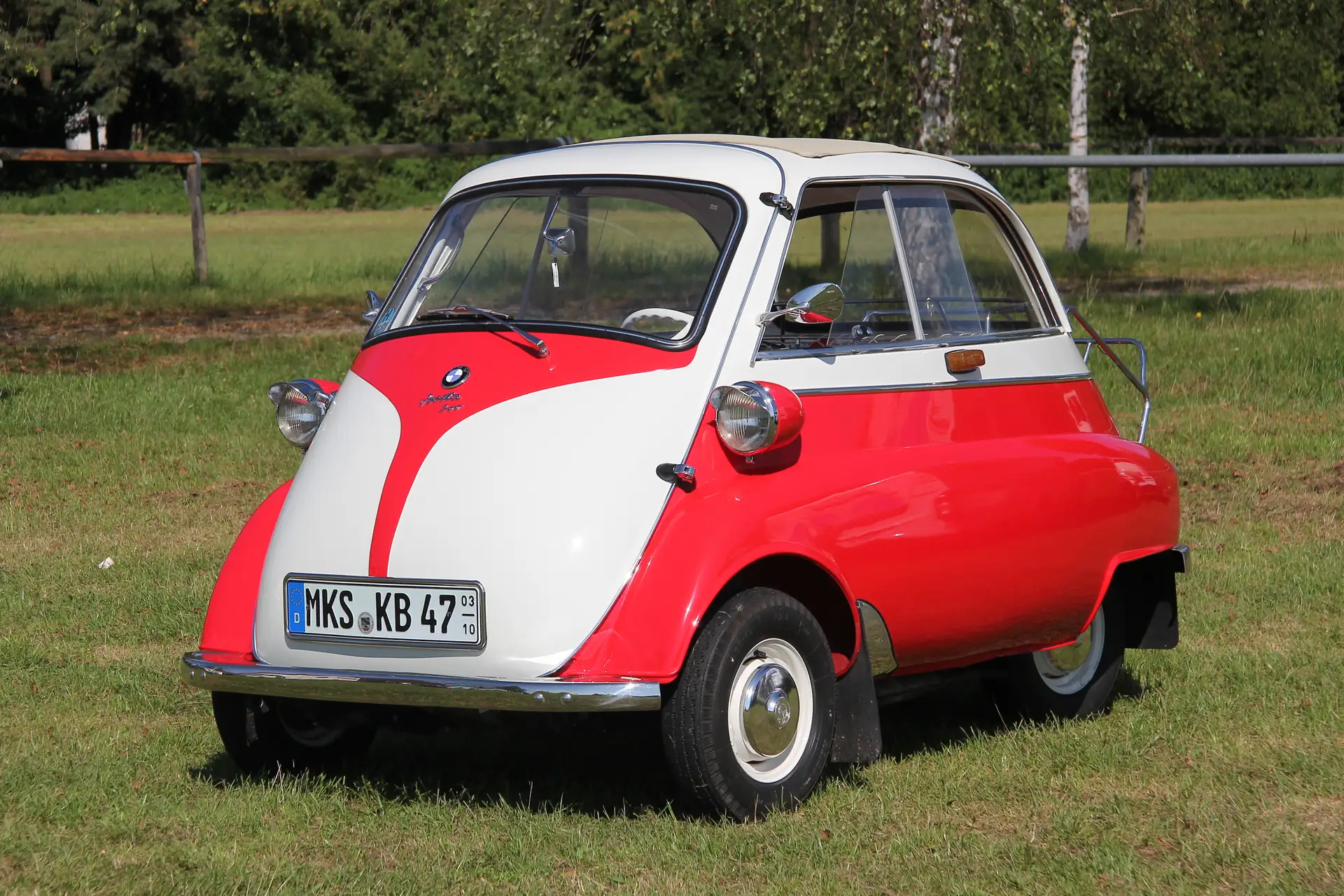
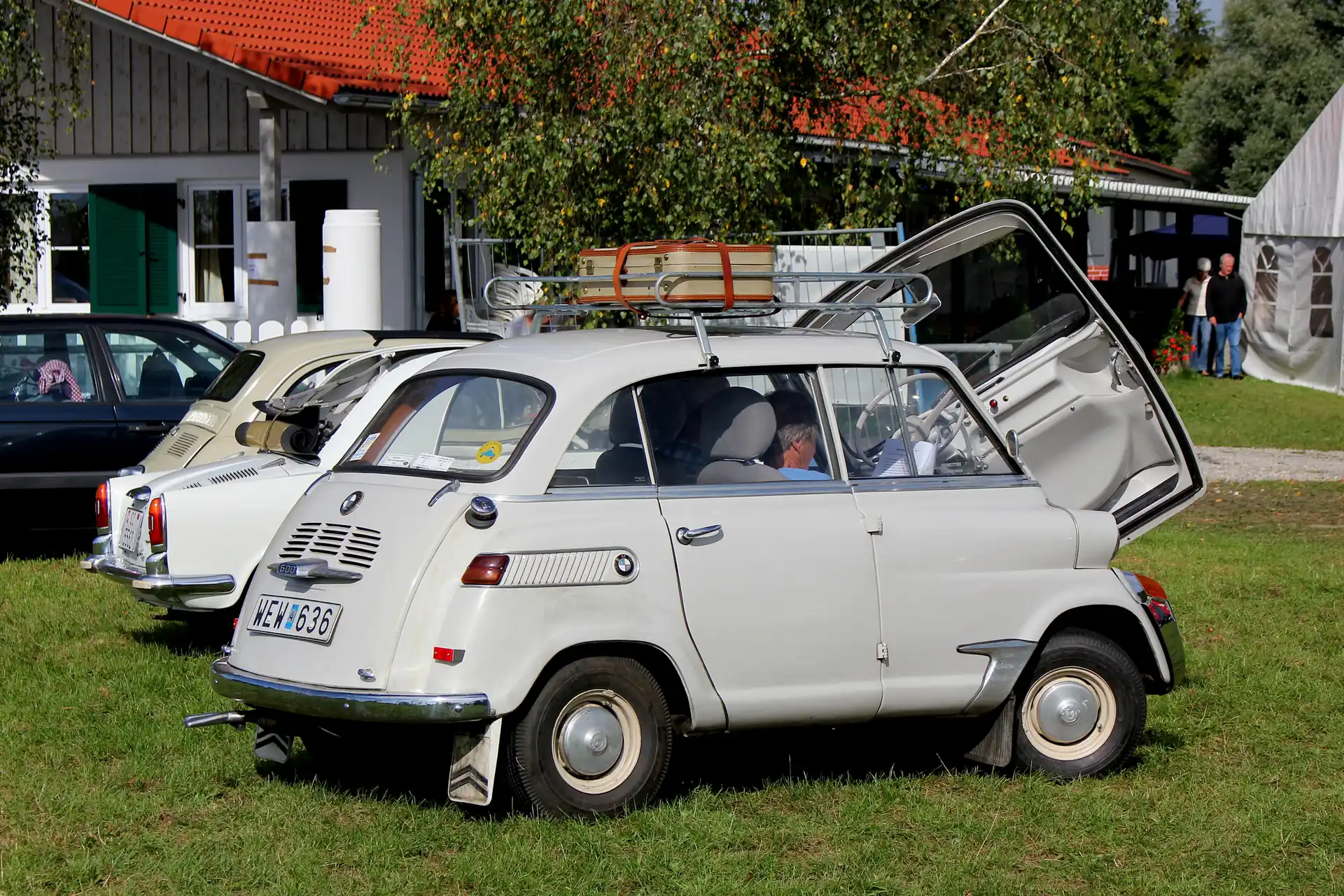
Just as after the First World War, it was primarily motorcycle sales that kept BMW above the bankruptcy threshold. Not everyone wanted to arrive at work soaked, however, so BMW came up with an Italian-designed car. An entirely different category was formed by the miniature Isetta (a licensed production of the Italian Iso Isetta), its later derivatives the BMW 600 (a four-seat Isetta) and BMW 700 (a small two-door coupé with a rear engine). The Isetta models used BMW motorcycle engines, which made production costs significantly lower.
The Isetta went down in BMW history as the saviour of the brand, helping both BMW — and the German public at large — to stabilise after the war. It carried the brand through to the 1960s, when West Germany became economically very successful, thereby paving the way for BMW's true ascent with the Neue Klasse range.
As regards naming, it is evident that the 1950s had no unified logic whatsoever. Designations such as 600, 700, 501, 507, 3200 CS and others existed side by side. The digit "3" no longer necessarily meant "car" — the earlier rule was violated by models such as 501 and 700.
There is also frequent speculation that Peugeot entered the picture with its concept of three-digit names with a zero in the middle (401, 301…), which it had used since 1929 — long before BMW. Indeed, this is why the iconic Porsche 911 is not called the 901, even though that was its intended name. Approximately 82 highly sought-after collector cars from early production in 1964, designated as Porsche 901, were indeed built. Since the French rightfully protected their numbering, BMW decided to change its convention yet again.
Either way, in the early 1960s BMW abandoned its chaotic naming and began looking for a new direction.
1962–1966 – Searching for a New System (Neue Klasse and the "02")
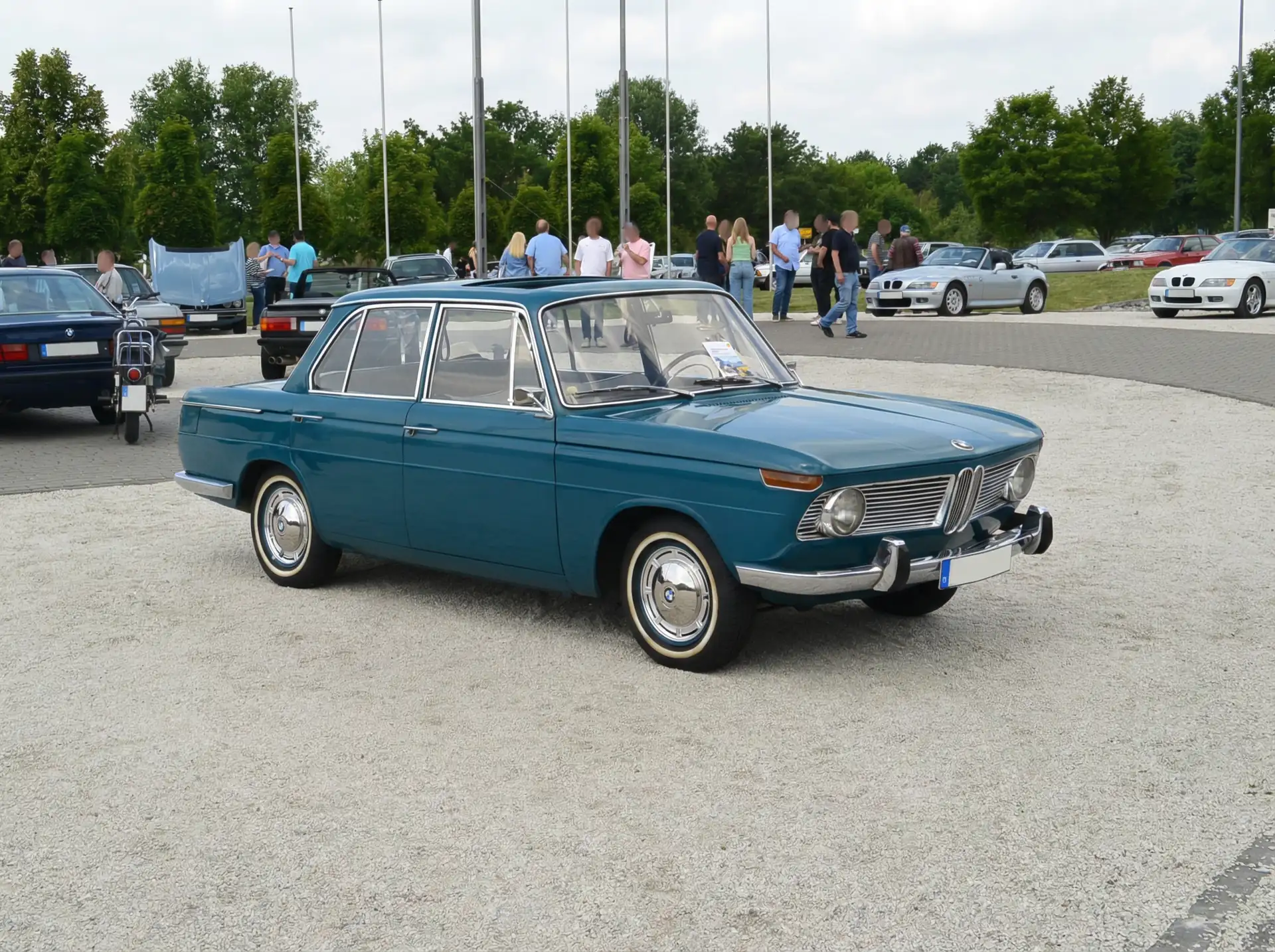
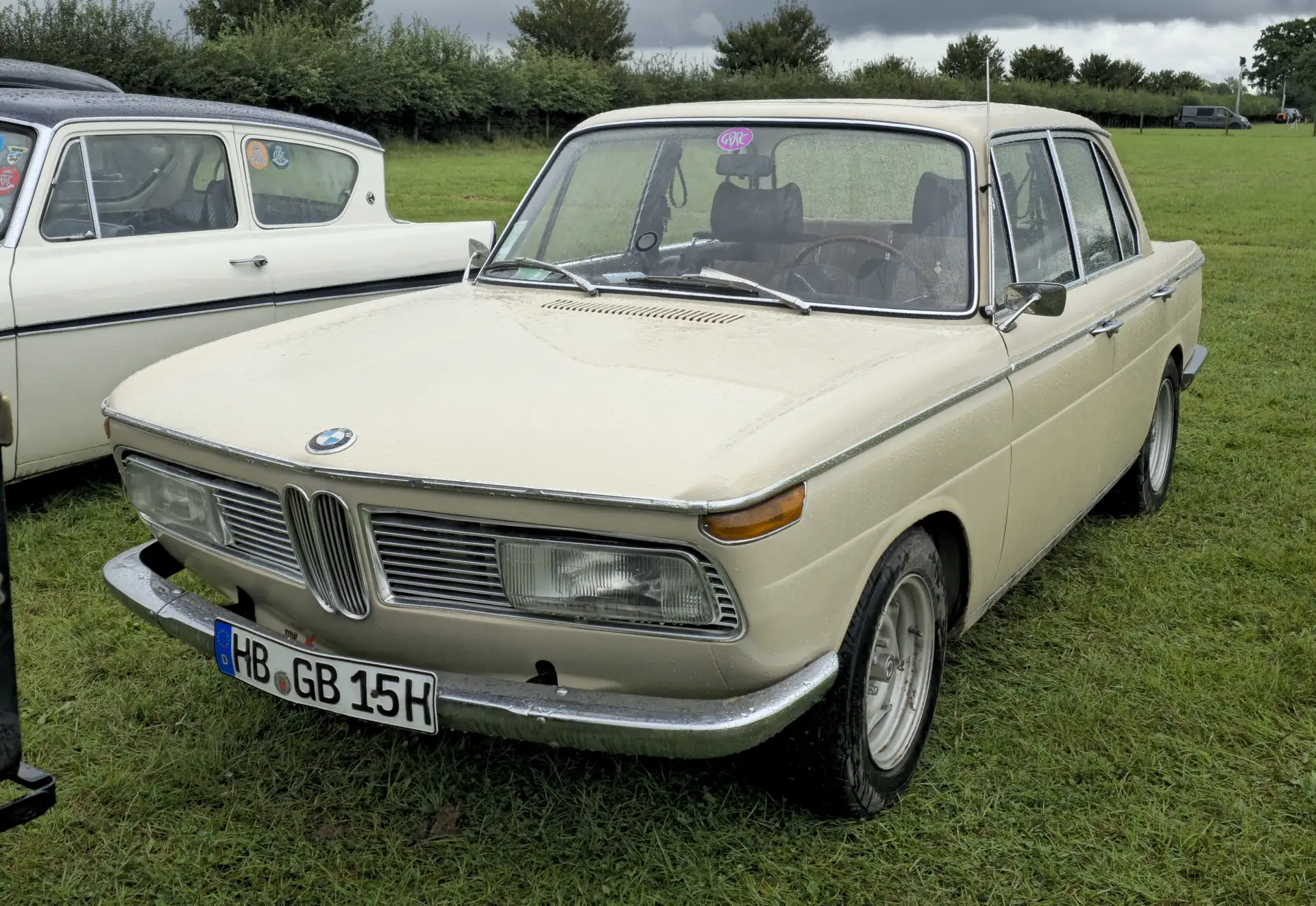
In 1961–1962, BMW introduced a new model range called "Neue Klasse" (New Class), which was finally meant to establish the company as a sporting-premium car brand — and at precisely the right moment. While the Isetta had only served as a bridge to a new era, the Neue Klasse represented a decisive turning point in profitability. With this range came a new model naming system based on engine displacement. The saloons BMW 1500, BMW 1600, BMW 1800 and BMW 2000 received designations corresponding to their engine displacement (for example BMW 1500 had a 1.5-litre engine, BMW 1800 a 1.8-litre M10 unit, etc.). This system seemed logical and straightforward. The BMW 1600 also gave rise to a sportier two-door variant called the 1600-2, which then gave birth to the entire celebrated "02" range. This included the 1602, 1802 and the most famous 2002.
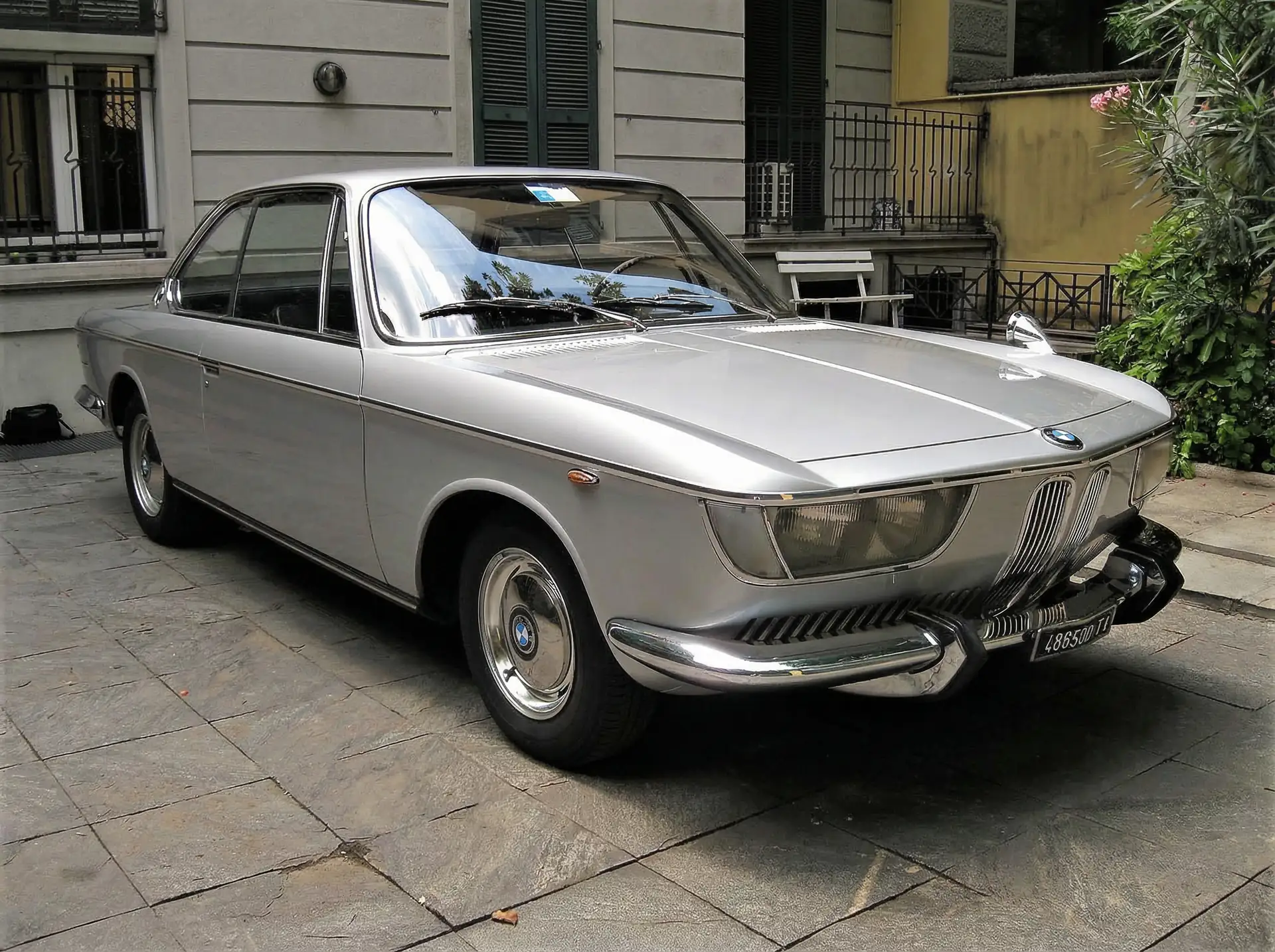
A new rule thus emerged: the last two digits "02" denoted a two-door body, as opposed to "00" which was reserved for four-door saloons. For example, the BMW 2002 had a two-litre engine and two-door bodywork, while the equivalent four-door saloon with the same engine was designated BMW 2000 (or BMW 2000 Neue Klasse). However, as BMW has traditionally loved creating rules only to immediately break them, the BMW 2000 C and BMW 2000 CS (Coupé / Coupé Sport) arrived in 1965, derived from the Neue Klasse saloon and completely ignoring the "02" rule just described.
The abbreviation "CS" — "Coupé Sport" — now came into full use. The BMW 2000 CS with its two-litre engine was more luxurious and heavier than the smaller 1602 and 2002 models. It can be considered the forerunner of the later large coupés, specifically the BMW E9 model range and, in a broader sense, the subsequent 6 Series.
In the mid-1960s, BMW was thus experimenting with the convention of "number ≈ engine displacement in cc", and for two-door versions used either the suffix "02" or standalone designations such as CS for the coupé. But even this period did not last long — at the turn of the 1960s and 1970s the company introduced a new naming concept that it has used in various forms ever since.
1968–2009 – The "series + engine displacement" convention
The era of the famous "E" codes begins. Many consider it the golden age of BMW. My personal view leans towards that camp. In my opinion, reliability, design and engineering all peak somewhere around the year 2000 — anything later I unfortunately perceive as gradual steps downward.
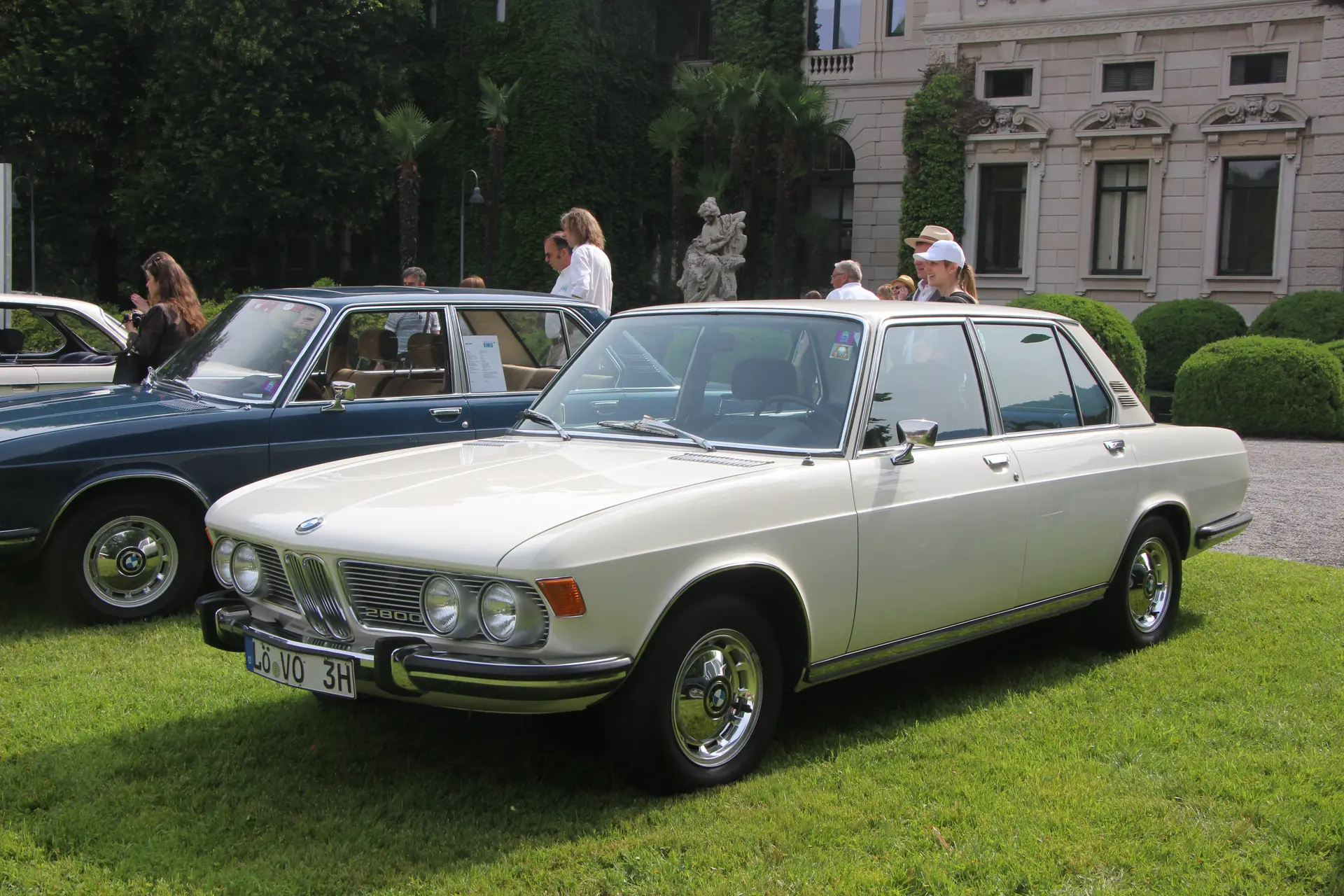
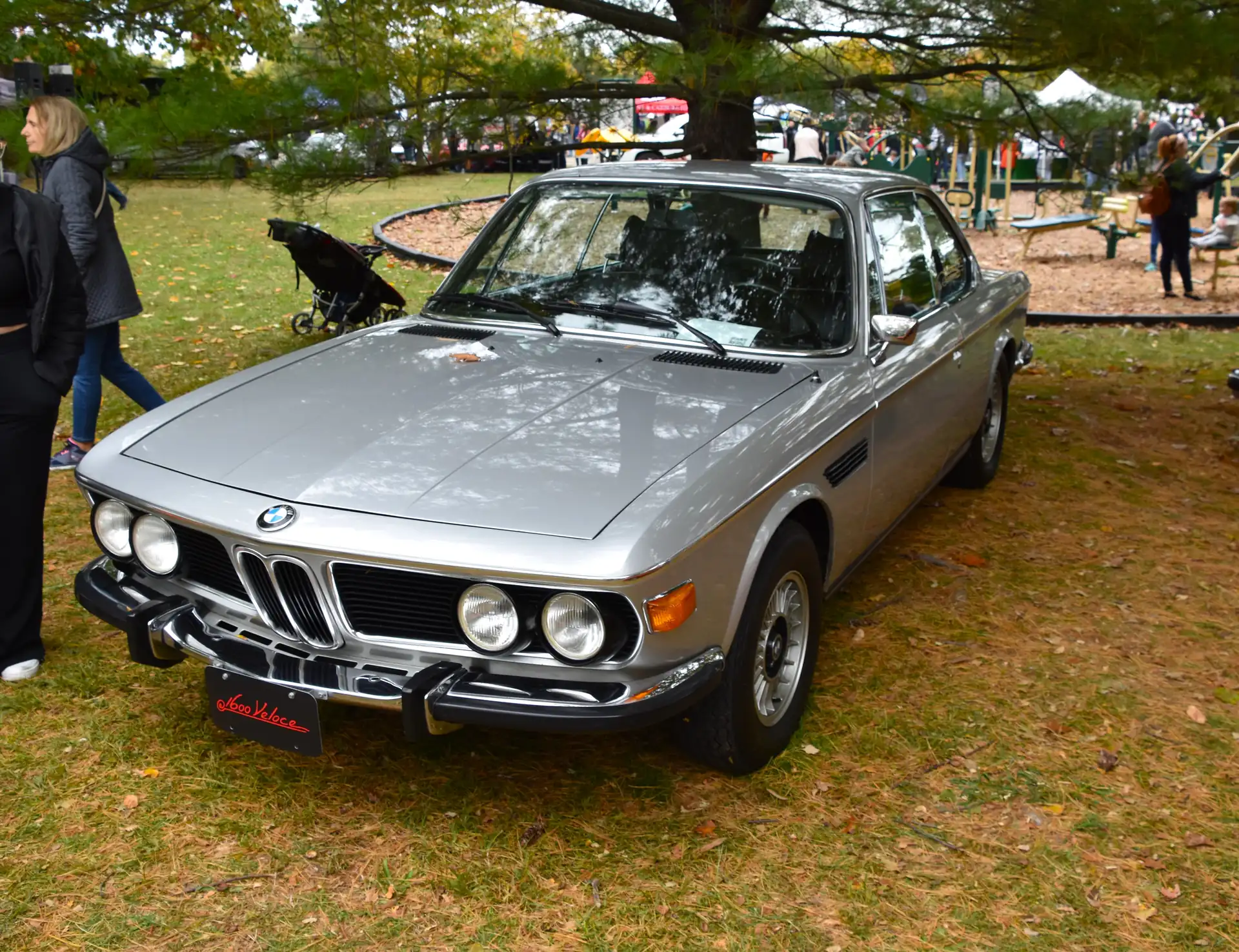
Let's set aside opinions on the cars themselves, however. The first car with a chassis code as we know them today was the BMW E3, nicknamed "New Six", which we would most closely compare today to the 7 Series (luxury saloon). It was followed by the E9, successor to the already-mentioned BMW 2000 CS, which simultaneously foreshadowed today's 6 Series (luxury coupé). The E9 and E3 shared much of the same engineering and engines. Each code was therefore originally meant to correspond to a particular body type. We'll soon see, however, that even this approach did not last very long.
In later years, however, a revolution came in the model names themselves: the designation 3.0 CSi meant a three-litre engine, Coupé Sport and electronic fuel injection. The designation 3.3L (L as in lang) indicated the long-wheelbase version. Except… in the E9, the letter L meant Leicht — the lightweight variant.
- BMW E3 3.0S: saloon, 3.0l engine, carburettor
- BMW E3 3.0i: saloon, 3.0l engine, fuel injection
- BMW E3 3.0Li: saloon, long wheelbase, 3.0l engine, fuel injection
- BMW E9 3.0 CSi: coupé, 3.0l engine, fuel injection
The Rise of the Series
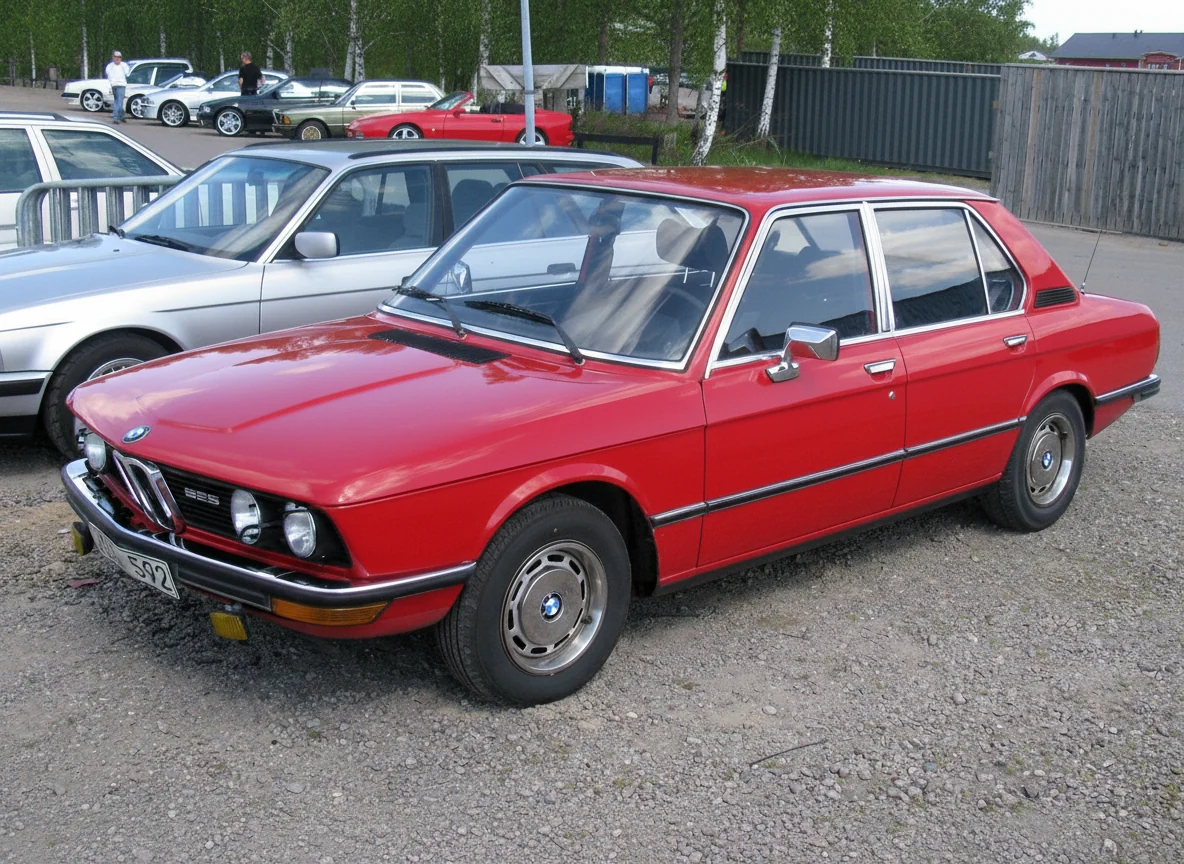
Following the BMW E3 and E9, the series, as we know them today, finally came to light. The BMW E12 became the first representative of the 5 Series.
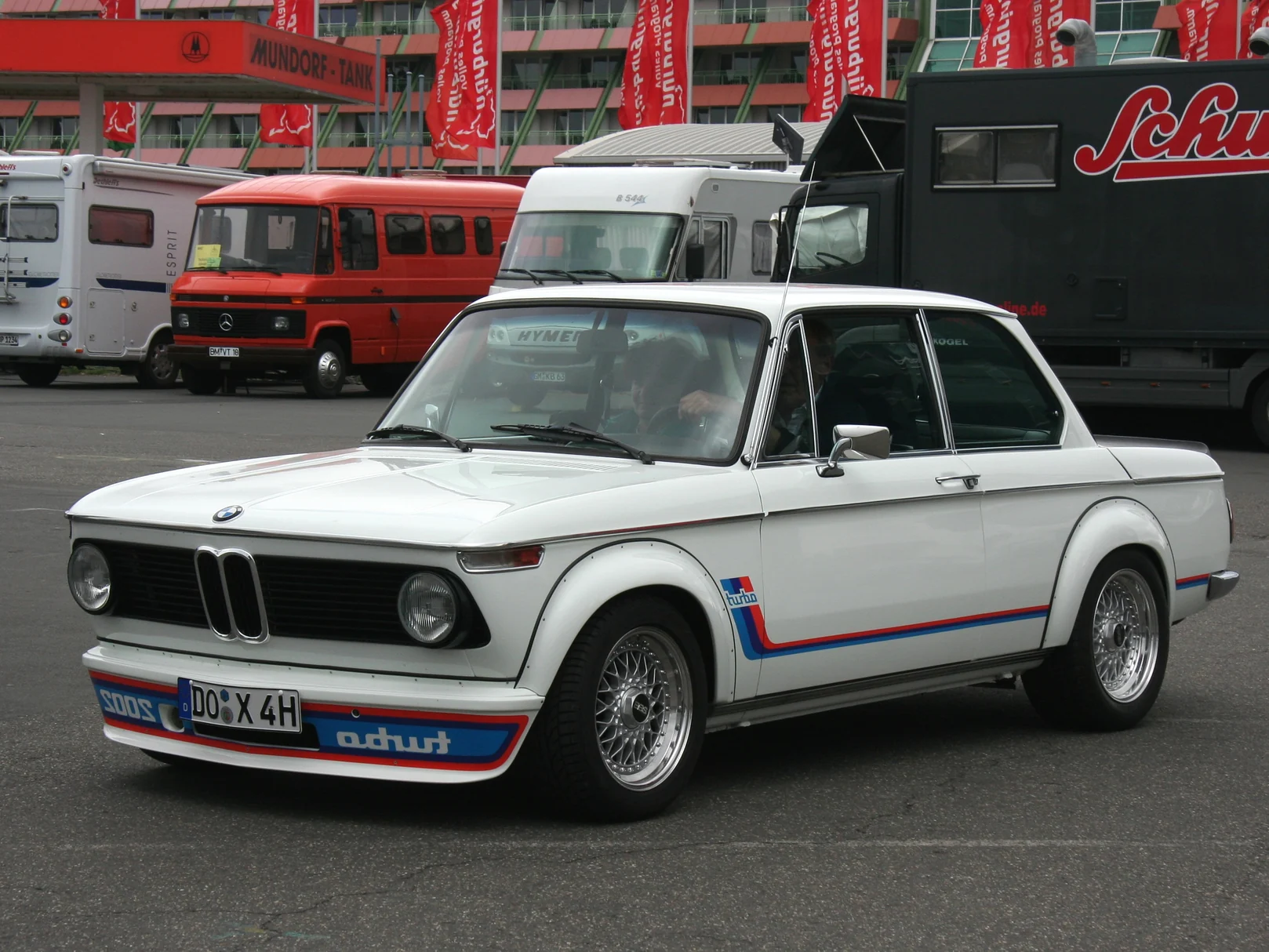
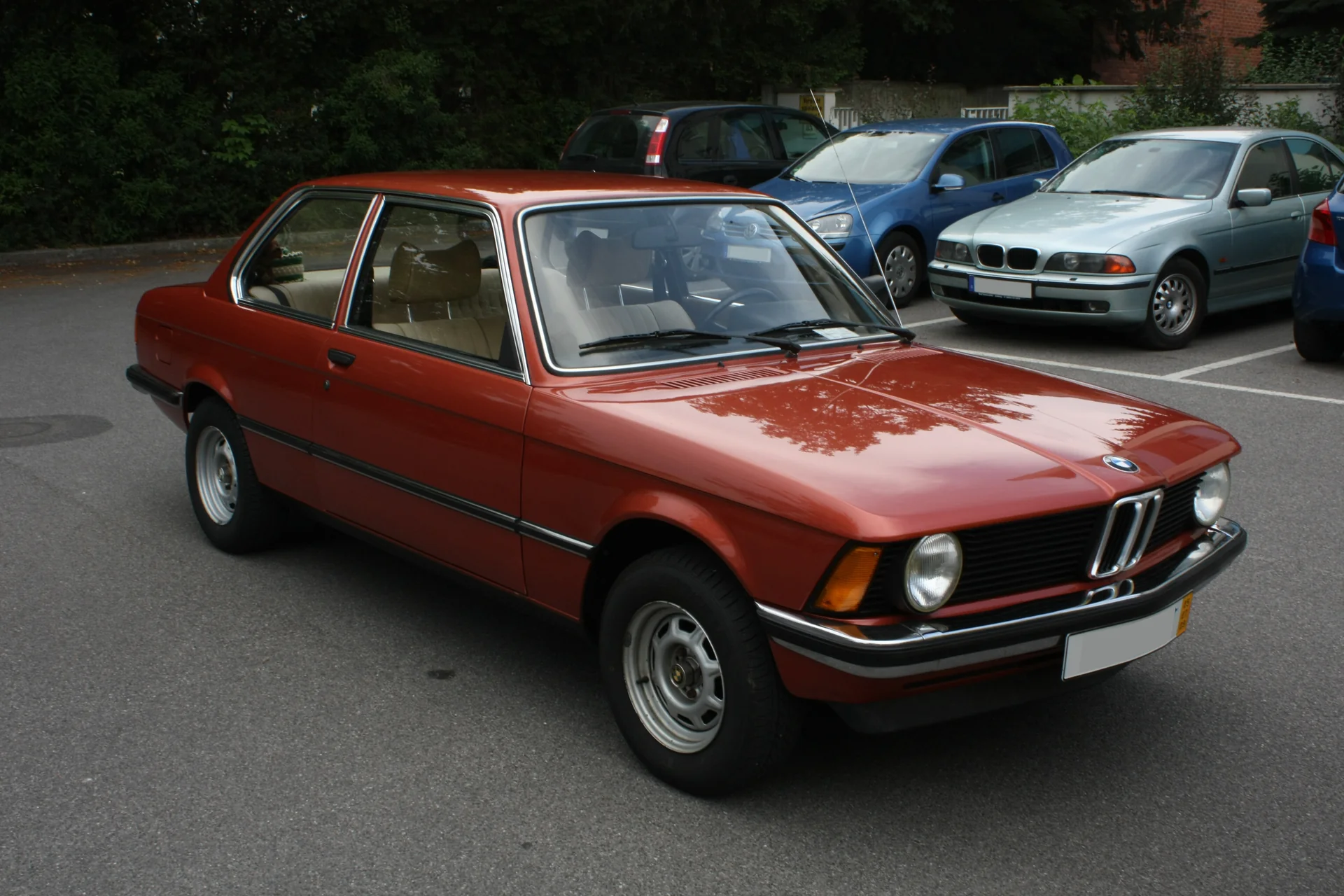
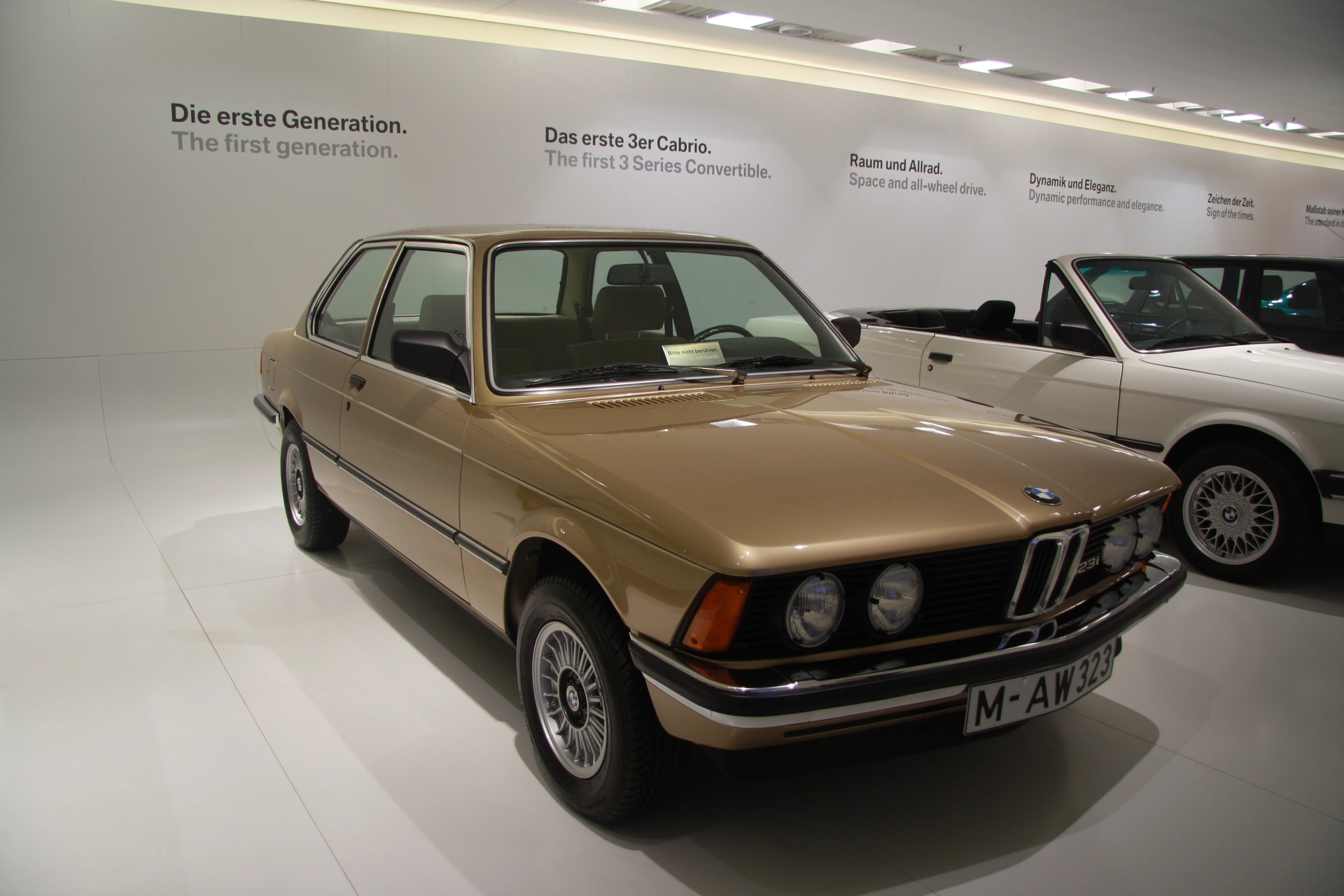
The 3 Series followed. Here it is worth mentioning one lesser-known detail. Technically speaking, the very first car in this series was the already-mentioned BMW 2002 Turbo, which bore the code E20. The reason was that the "preceding" E3, E9 and E12 were conceived on paper earlier than the E20 but entered production later — the E20 was therefore an independent project built on the foundations of the then-current Neue Klasse. The E20 is also considered the first mass-produced turbocharged car in Europe and became the basis for BMW M division's entire sports car segment. The later, far better-known E21 models then adopted many technical solutions directly from the E20.
The Return of Convertibles
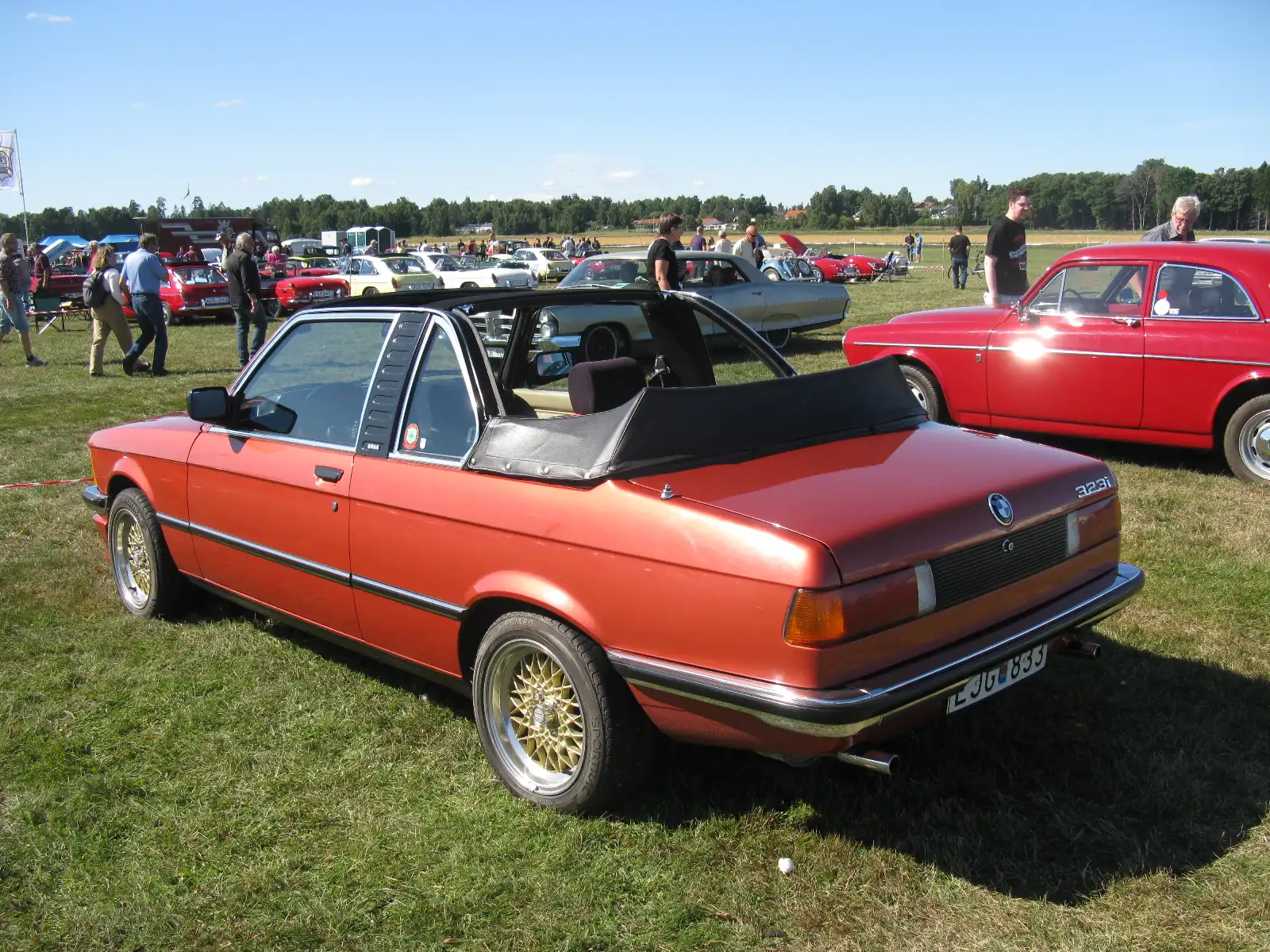
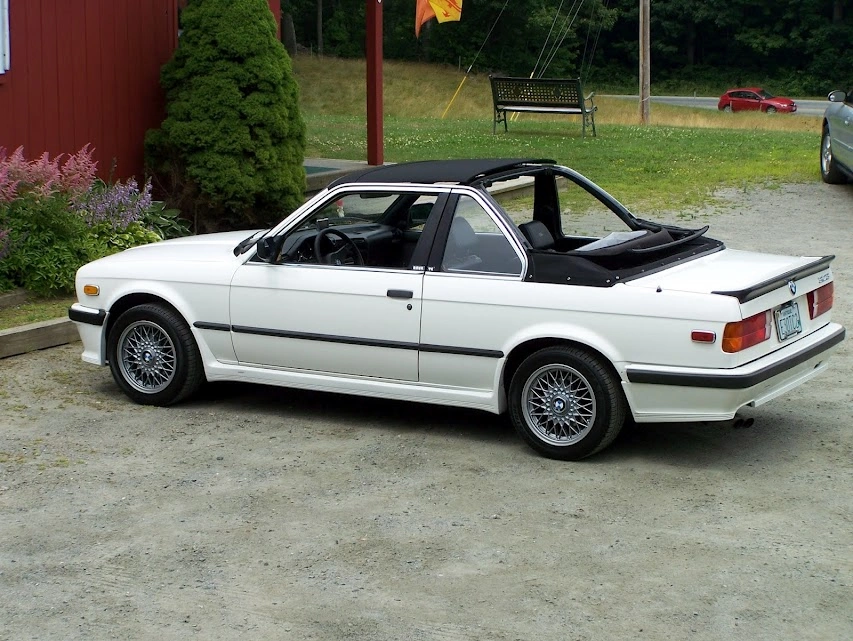
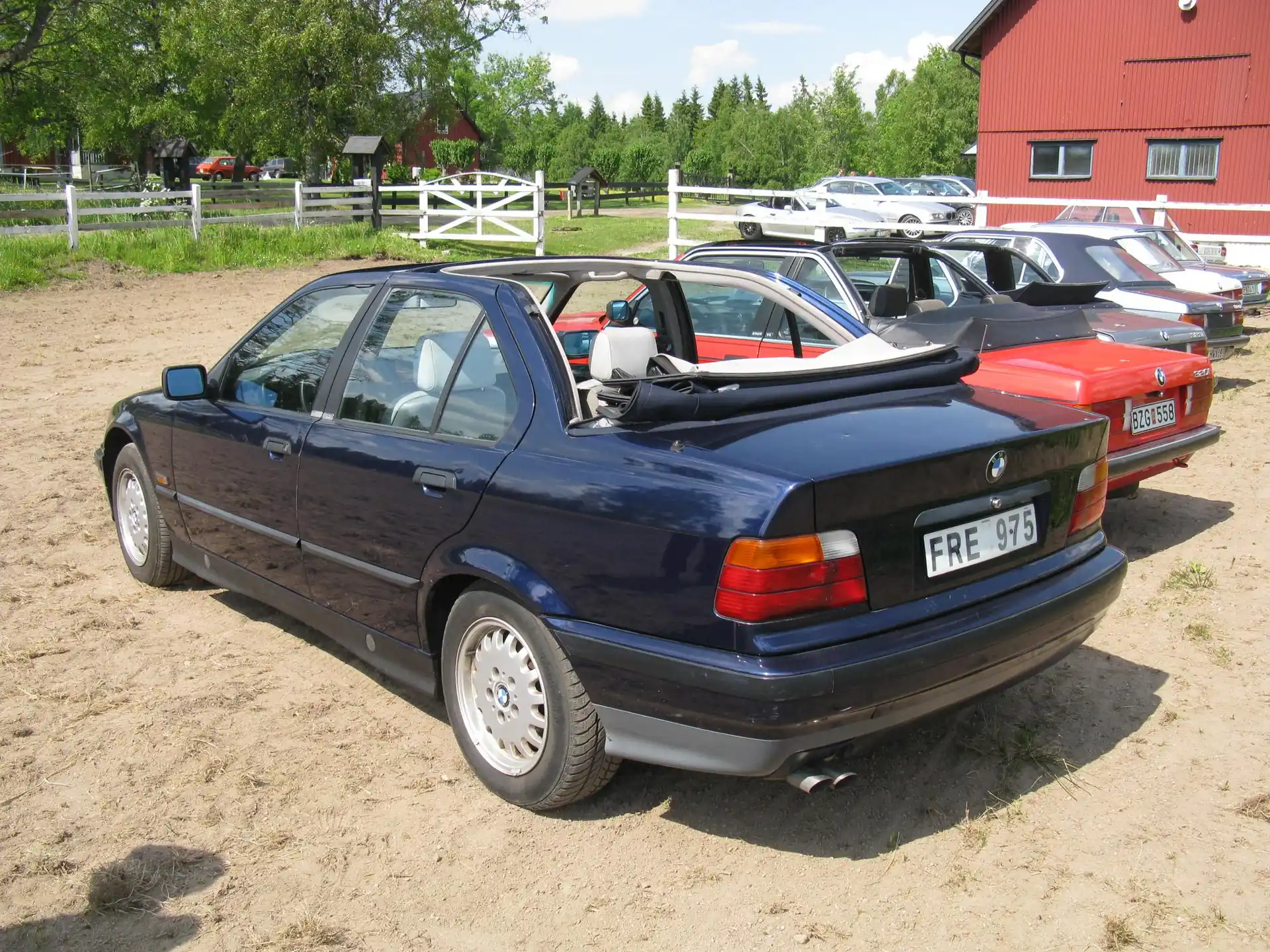
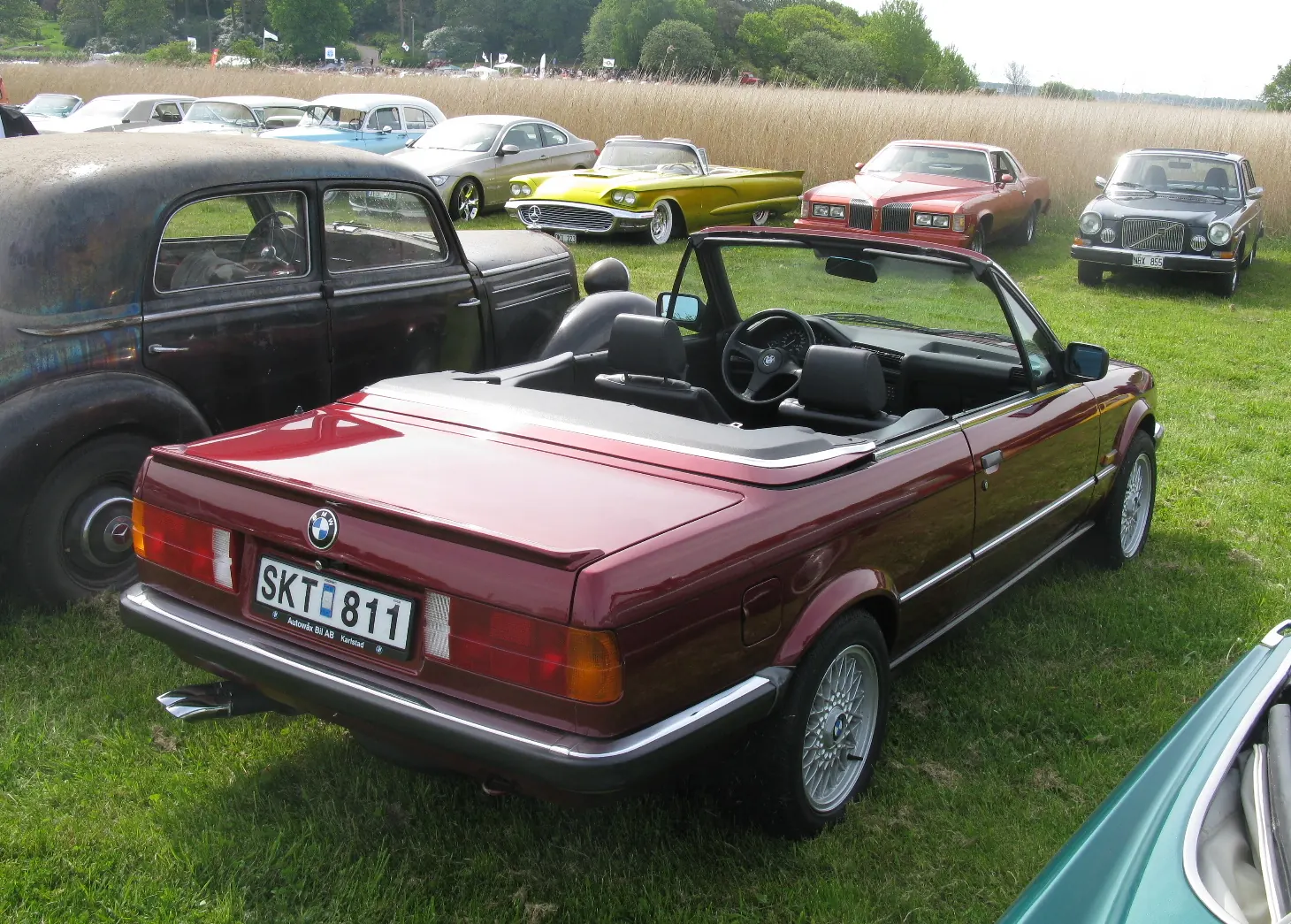
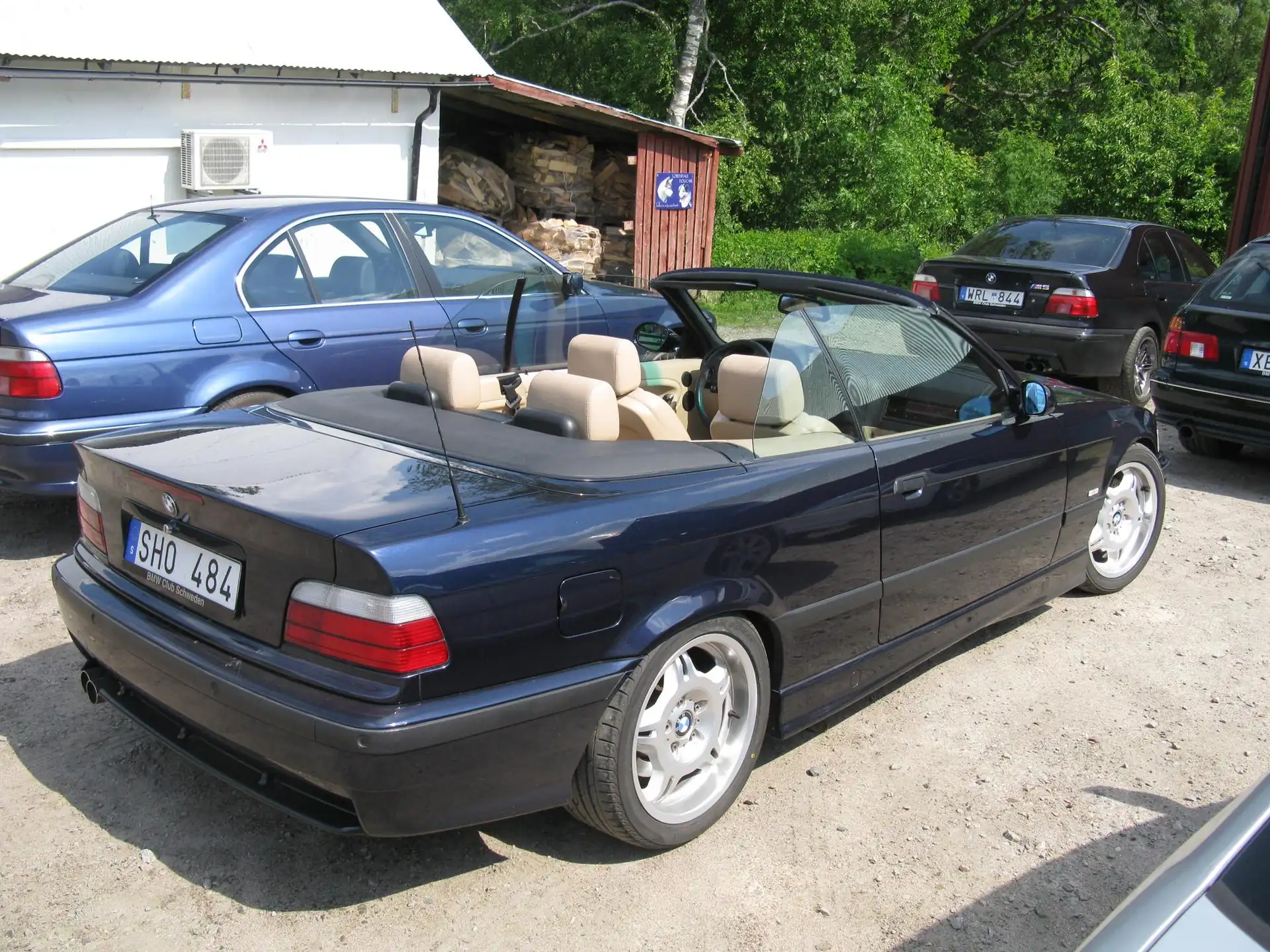
Open-top body styles — the so-called targa, i.e. near-convertibles that retained their fixed pillars and allowed only the roof panel to be removed — were initially offered on the E21 in the form of conversions by the coachbuilder Baur. BMW responded to the success of these modifications and, in collaboration with Baur, began producing its own full convertibles, starting with the BMW E30. Baur continued to offer its solutions further, right through to the E36 model. Their advantage was the ability to convert a customer-supplied car virtually at any time.
Body Style by Code? Not Any More.
The 7 Series (E23) and 6 Series (E24) appeared on the market at practically the same time. While the 7 Series has to this day exclusively one basic body style (saloon), the 3 Series generations E30, E36 and E46 offered four to five different body styles under a single code. It was therefore always necessary to specify the body type precisely — otherwise, when ordering rear lights for an E36 for example, you might receive four completely different and incompatible parts.
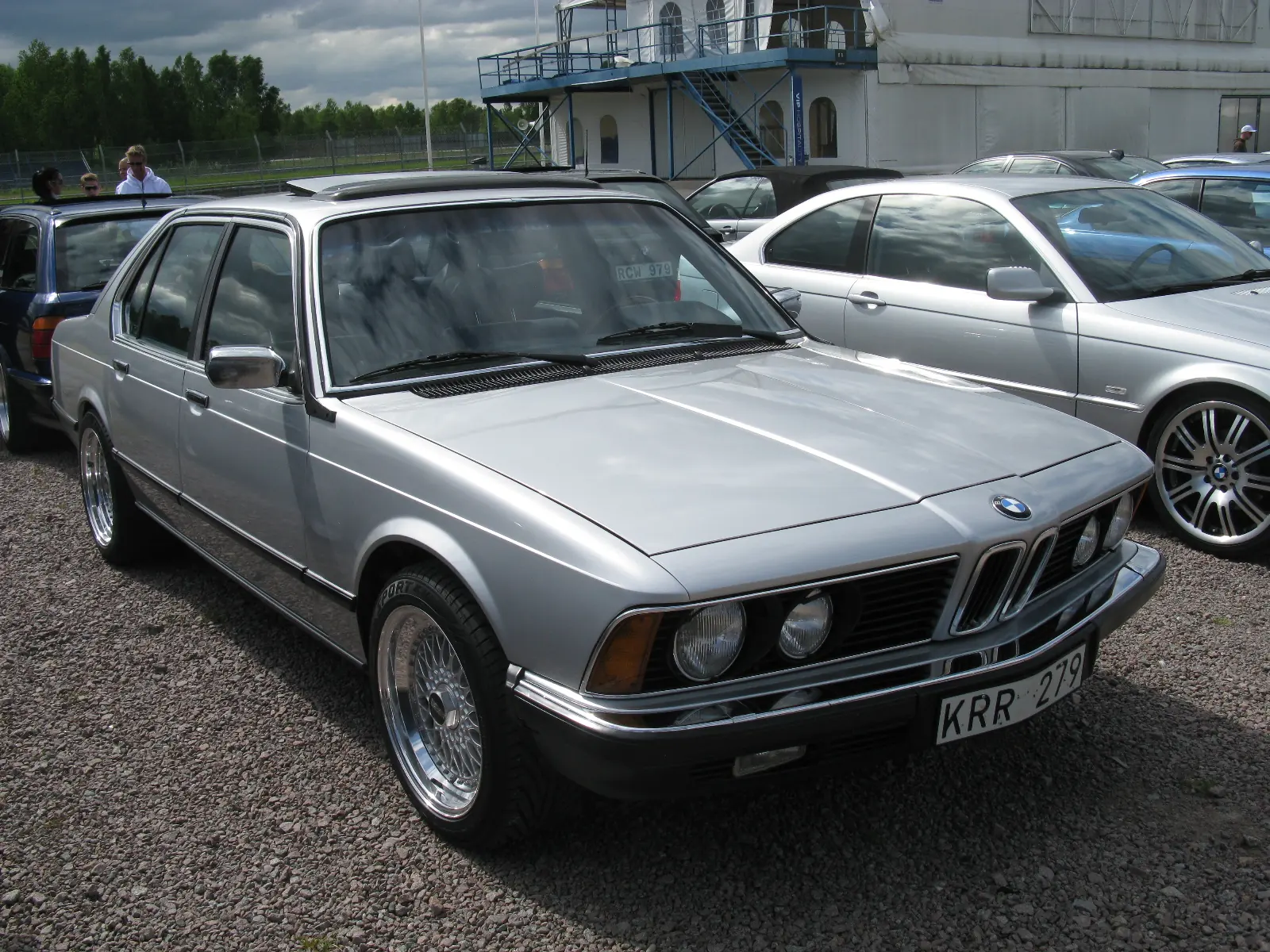
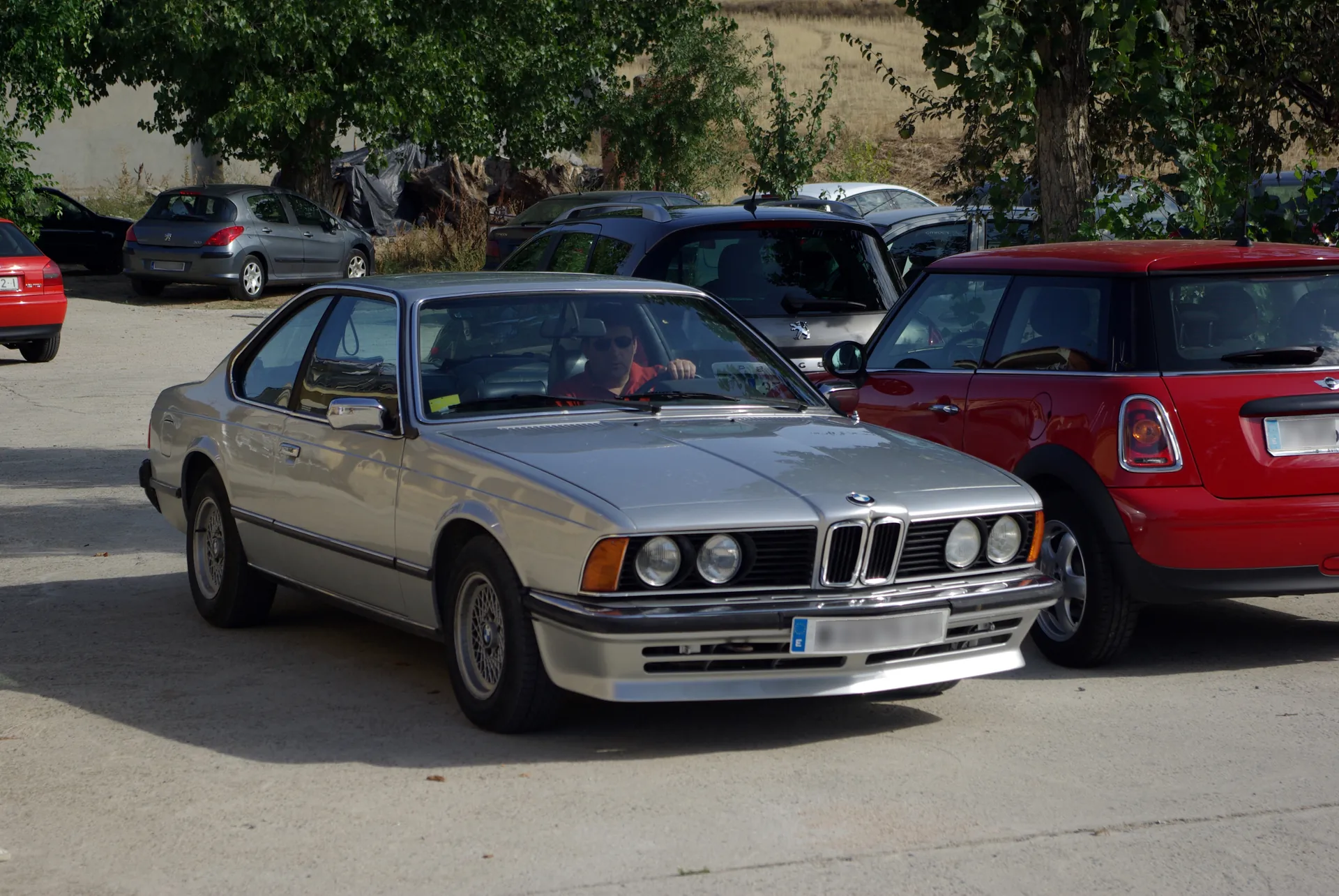
Newcomers to BMW terminology and nomenclature often stumble across another "non-convention" — the complete absence of any sequential logic in the chassis code numbering. In plain English: "Why is the first car designated E3 and the next E9? Where are E13, E14, E15…? Is there any logic to which car gets which E?"
The answer is unfortunately simple: no strict rules or sequences exist. The numbers in the E codes do not clearly define the sequence — a number of cars received their internal codes in a certain order of development but reached the market in a different order. The only way to navigate this is simply to memorise them.
And then there are the marketing model names. These were originally supposed to correspond to engine displacement — and it turned out that they did so only by coincidence relatively often. For example, the BMW E12 533i implies a 3.3-litre engine by its designation, but in reality had a 3.2-litre unit. The E21 315 had a 1.6-litre engine, while one of the 316 models had a 1.8-litre engine. If there is anything in BMW's naming history that becomes reliable, it is the chaos.
In BMW's entire history, a miracle occurred precisely once: only the BMW Z4 E85 contains an engine whose displacement actually matches what its name implies. All other models came closest to this convention at best — the nearest were for example the BMW E12, E32 and E34, where an otherwise clean record is spoiled by the BMW 735i and BMW 535i, both of which share the same 3.4-litre engine.
BMW, however, presented this situation on their website in a somewhat embellished way. According to official materials, this convention was supposed to apply universally and practically without exception from 1972:
"1972 was a turning point in BMW model naming. The new system has been used consistently ever since."
Let us take a random sample of a few models from between 1972 and 2005:
- E36 323i = 2.5 l
- E39 530d = 2.9 l
- E46 320i = 2.2 l
- E60 525d = 3.0 l
- E65 750i = 4.8 l
If you are interested in a precise and complete comparison of all models with this BMW claim, you will find it below this article.
And we haven't even touched on the cases where one designation concealed several different engines. A typical example is the BMW 730i E32: from 1989 to 1992 it was a six-cylinder M30, while from 1992 to 1994 the identical designation was borne by a V8 M60 engine — albeit with the same displacement. You can distinguish them only because the V8 and V12 versions received a wider front grille to denote their superiority over the six-cylinders. Yes, the number of cylinders was not indicated in the name — but the displacement remained the same, so what's the problem?
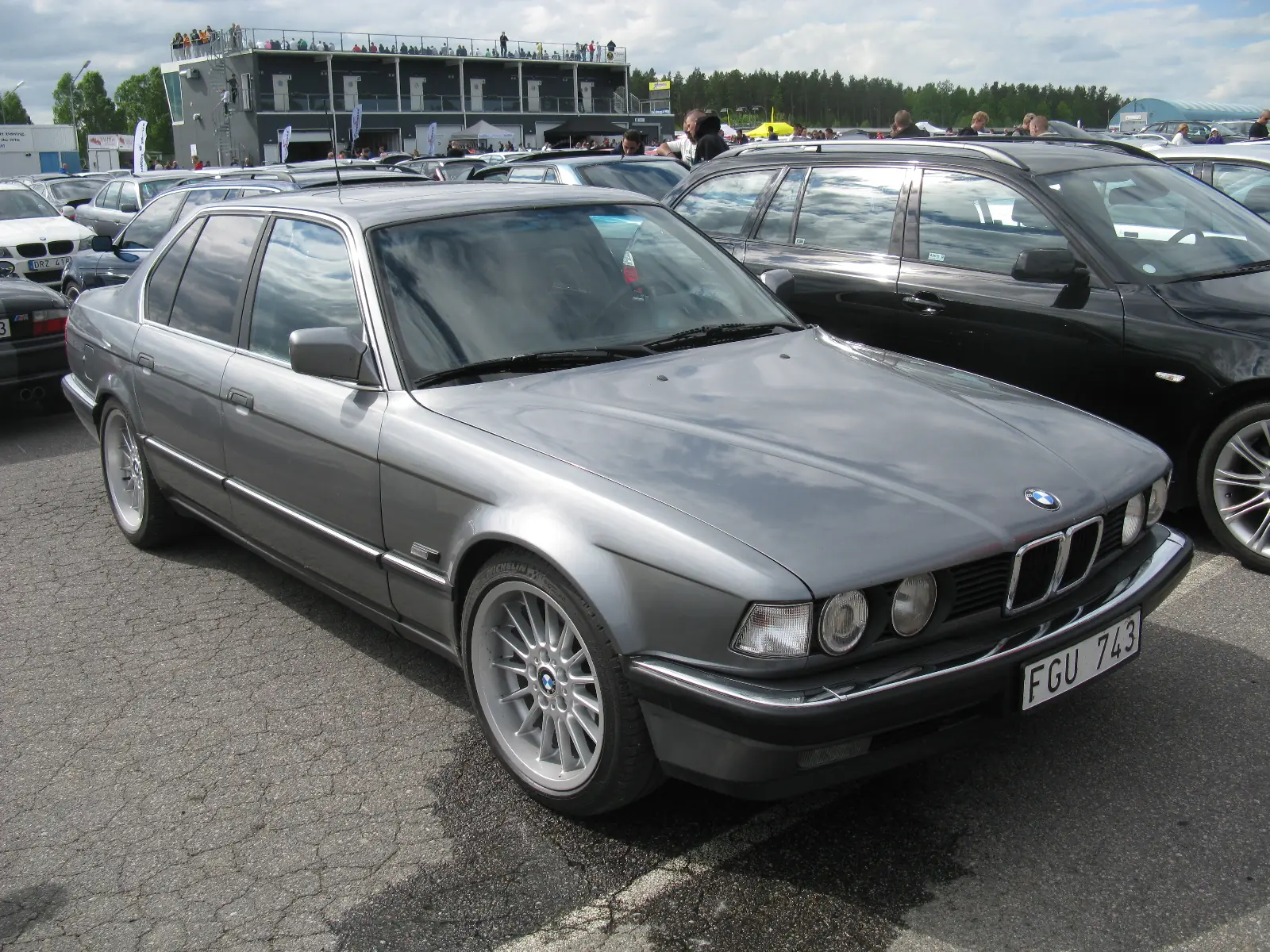
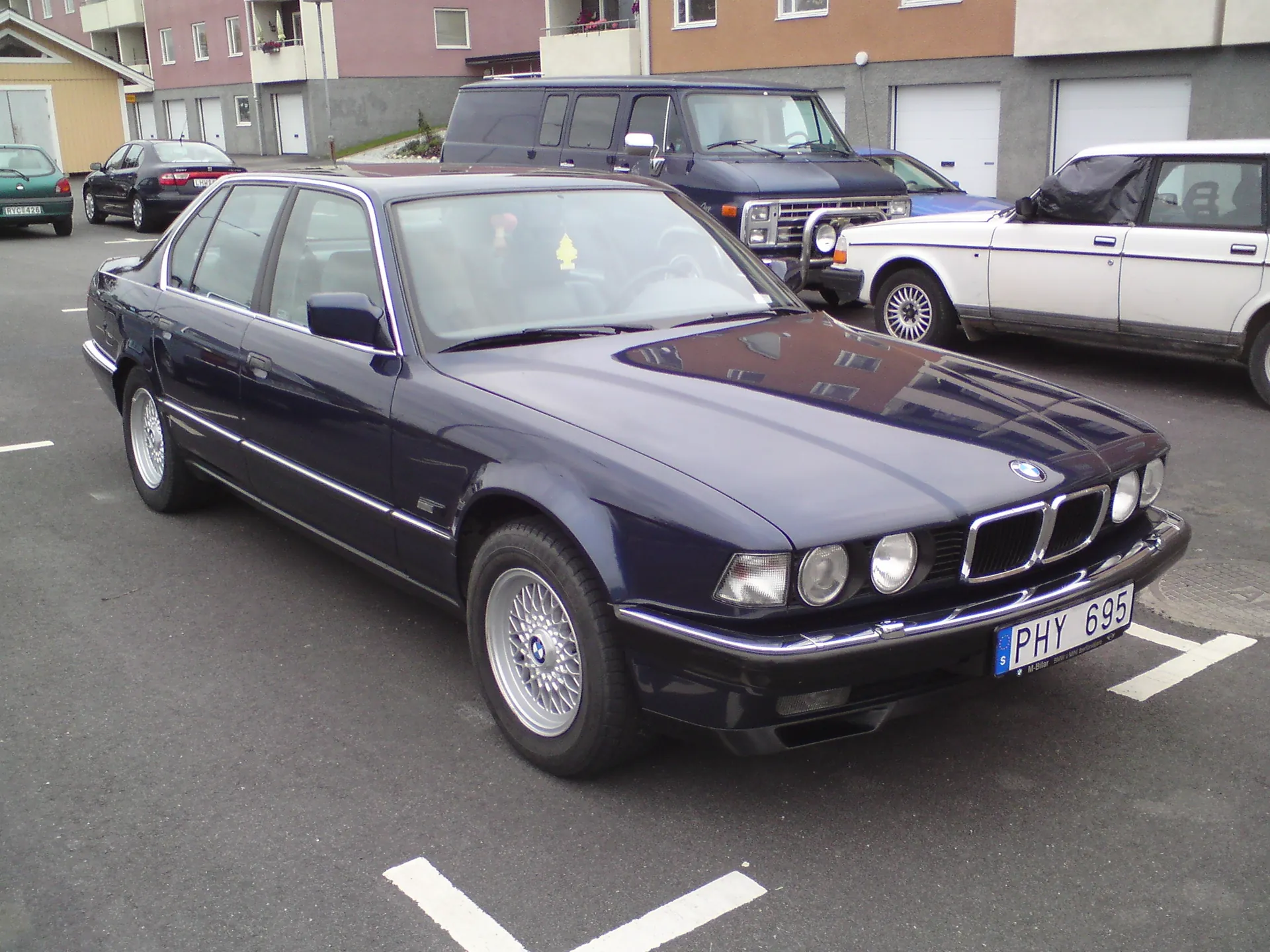
Another example: the BMW 320i E46 was initially produced with a 2.0-litre M52 engine, but before the facelift it was replaced with a 2.2-litre M54 engine. Under the then-current convention it should logically have been renamed the 322i to maintain consistency — but it was not, and the name remained 320i. Unlike the E32 mentioned above, however, you have absolutely no chance of spotting the difference from the outside.
That this is no isolated exception is demonstrated by the BMW 740i E38, which progressively used two different V8 engines: the 4.0-litre M60 and later the 4.4-litre M62. And the legendary BMW 745i E23? A turbocharged six-cylinder whose designation arose from the mathematical conversion 3.2 × 1.4 ≈ 4.5, with 1.4 being the then-commonly accepted coefficient for converting supercharged engine displacements. Someone was clearly trying to maintain the convention — until the South African version of the 745i arrived, which used the naturally aspirated M88 engine from the E28 M5, with a 3.5-litre displacement.
Similarly, the E60 525d received a three-litre six-cylinder engine after its facelift with lower power output, yet retained the 525d designation. Various power variants of the same three-litre diesel thus bore the names 525d, 530d, 535d, etc. — again with no direct relationship between the number and actual displacement. I would be happy to accept the argument that this serves to differentiate power output, but then I would need an explanation for why BMW sometimes objects to comparing a new model with an old one and sometimes couldn't care less.
Consider the aforementioned E60 525d — first with a 2.5-litre six-cylinder producing 130 kW, then after the facelift again as the 525d but with a 3.0-litre six-cylinder producing 145 kW. If the power argument were to hold, it should correctly have been called, say, 528d, in order to place it appropriately between the 525d and 530d in the power hierarchy.
In the case of the BMW 323i E46, they actually took this to heart — the 2.5-litre engine carries a lower designation, reportedly so that customers would understand it was less powerful than the previous generation BMW 325i in the E36. As is clear, every new "rule" BMW invents holds for a randomly long time — very often just once.
Returning Codes to Body Styles
Starting with the fourth generation 7 Series, designated E65/E66, BMW returned once again to dividing codes by body type. E65 represented the short-wheelbase version, while E66 denoted the long-wheelbase variant.
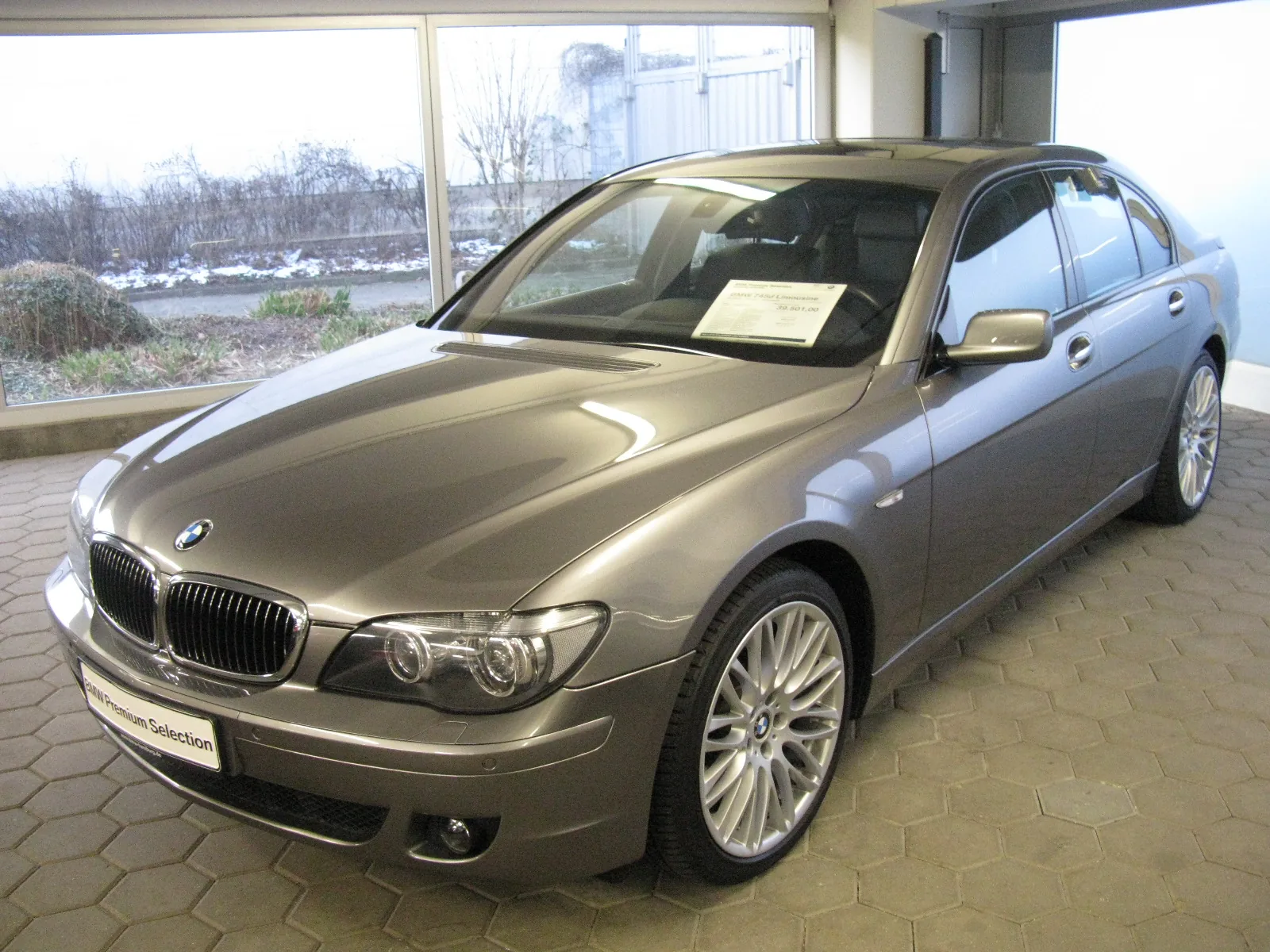
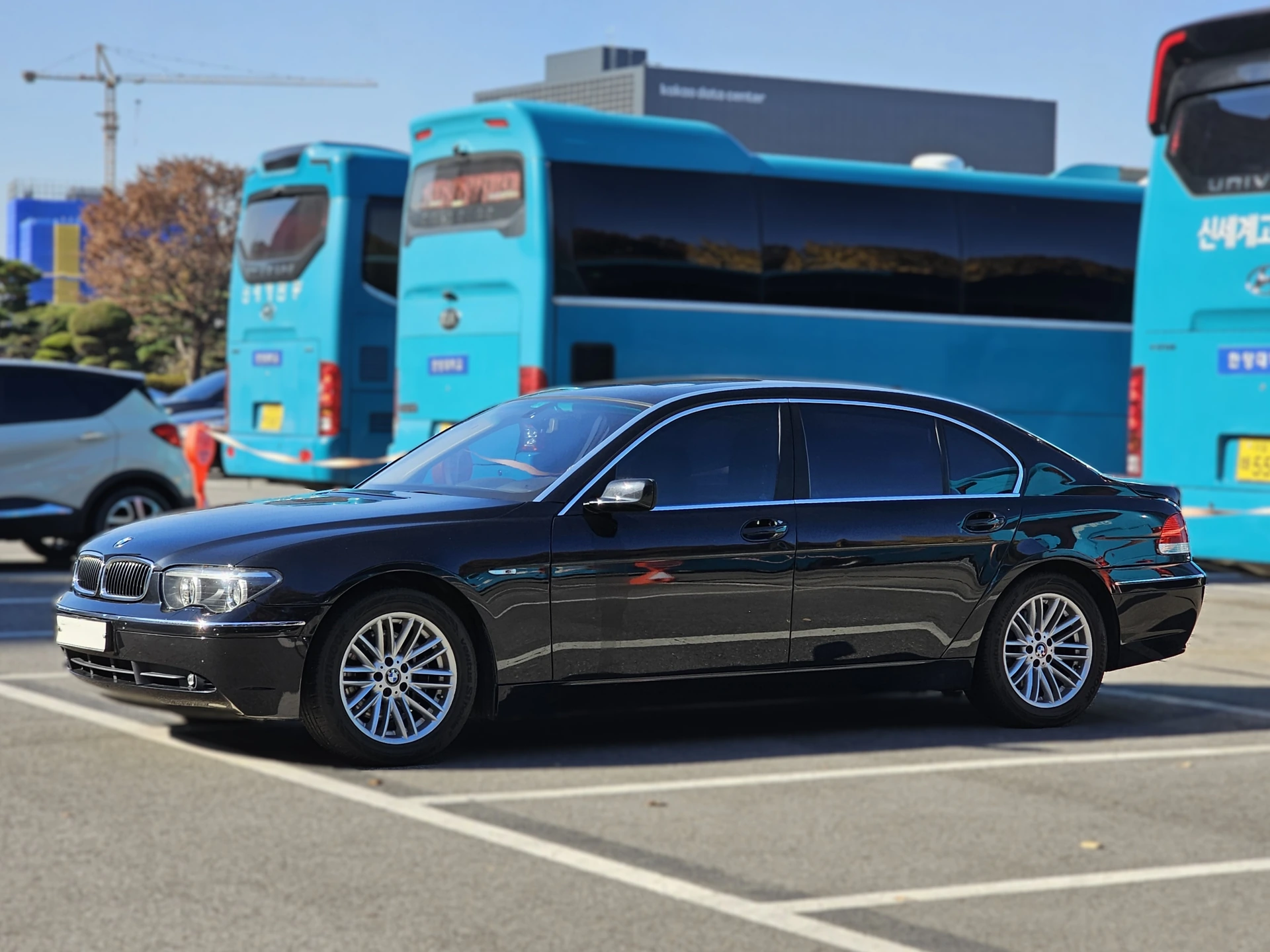
For the fifth generation 5 Series (E60), E61 was the Touring (estate) while E60 denoted the saloon. I deliberately write "subsequently", because although E60 carries a lower number than E65, it was actually the 7 Series E65 that went into production first.
The 3 Series was ultimately divided into four separate codes: E90 as the saloon, E91 Touring, E92 Coupé and E93 Convertible. BMW uses this system to this day.
In all fairness to history, a similar division already existed in the 1990s with the E36. In addition to the four basic body styles, further variants emerged: the BMW E36/5, known as the Compact, and also the BMW Z3, which was divided into the codes E36/7 (Roadster) and E36/8 (Coupé).
Li or iL? And Where Did the X Go?
The letter L was mentioned earlier as having appeared in model names around the turn of the 1970s. When it appeared in combination with the engine designation, it indicated the long-wheelbase version. For example, the BMW 750iL E38 was approximately 14 cm longer than the standard BMW 750i E38 in the rear door area.
When the letter L appeared in the combination CSL (Coupé Sport Leicht), on the other hand, it denoted a lightweight variant. The most famous example to this day is the BMW M3 E46 CSL.
Alongside this, however, there existed one exceptional model: the BMW L7 E38. This was an even longer variant of the BMW 750iL E38, often delivered in entirely bespoke configurations tailored to individual customer wishes. Only 899 examples were produced in total. To avoid having to extend the already-long doors of the iL version any further, the front and rear doors were separated by an approximately 20 cm pillar — the extra length by which the L7 was extended. Compared to the standard short-wheelbase version, the L7 was a full 34 cm longer.
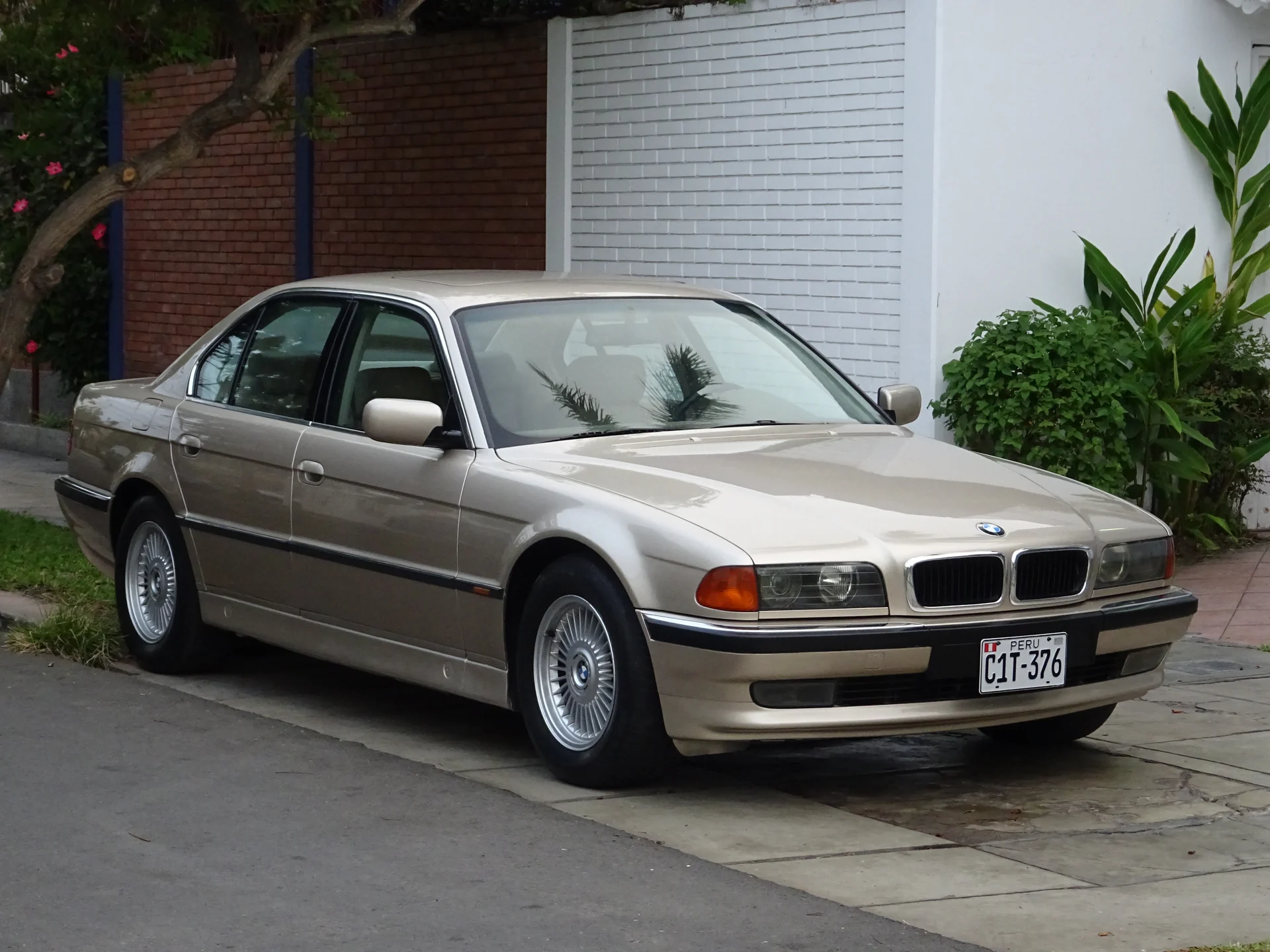
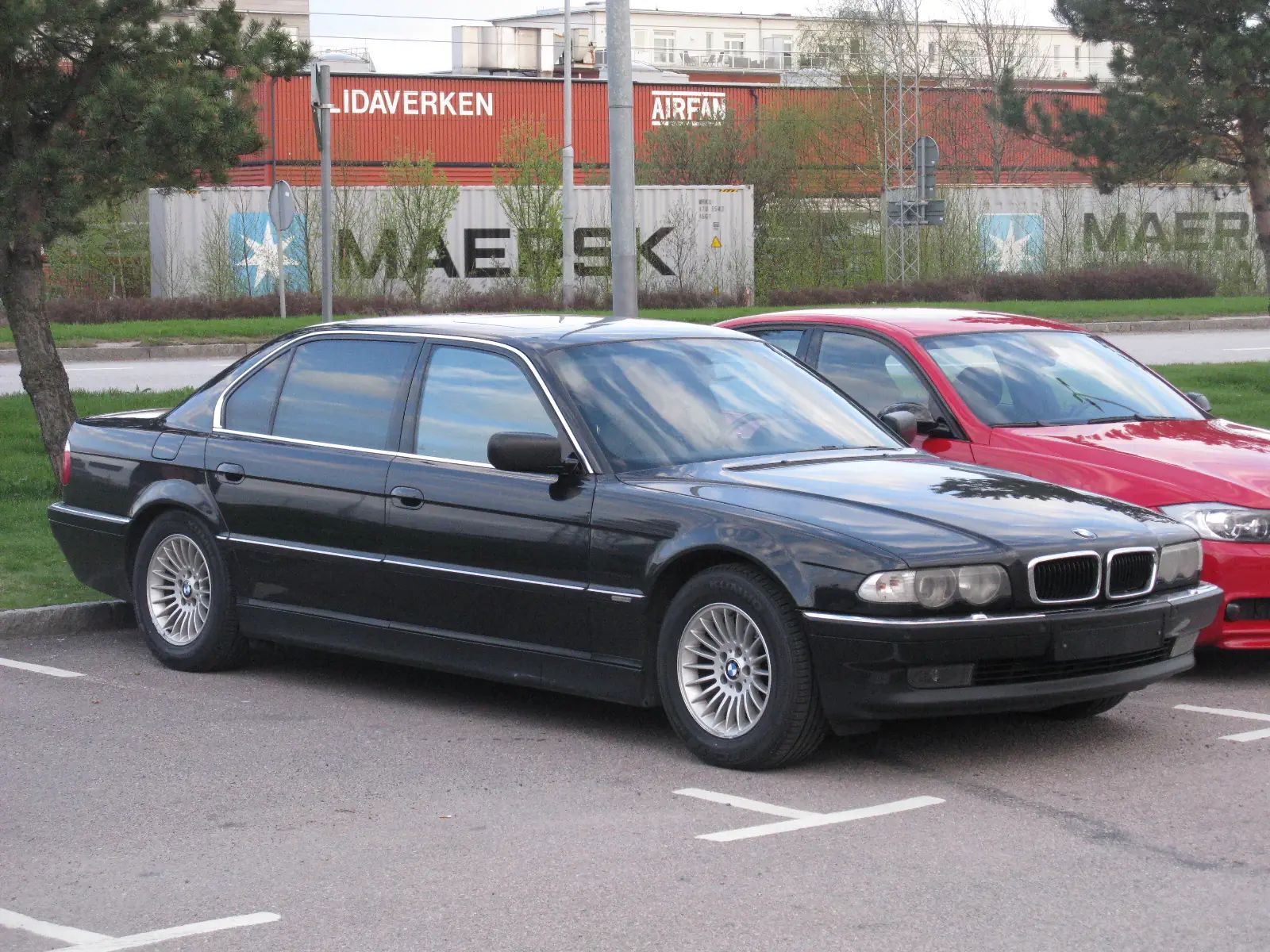
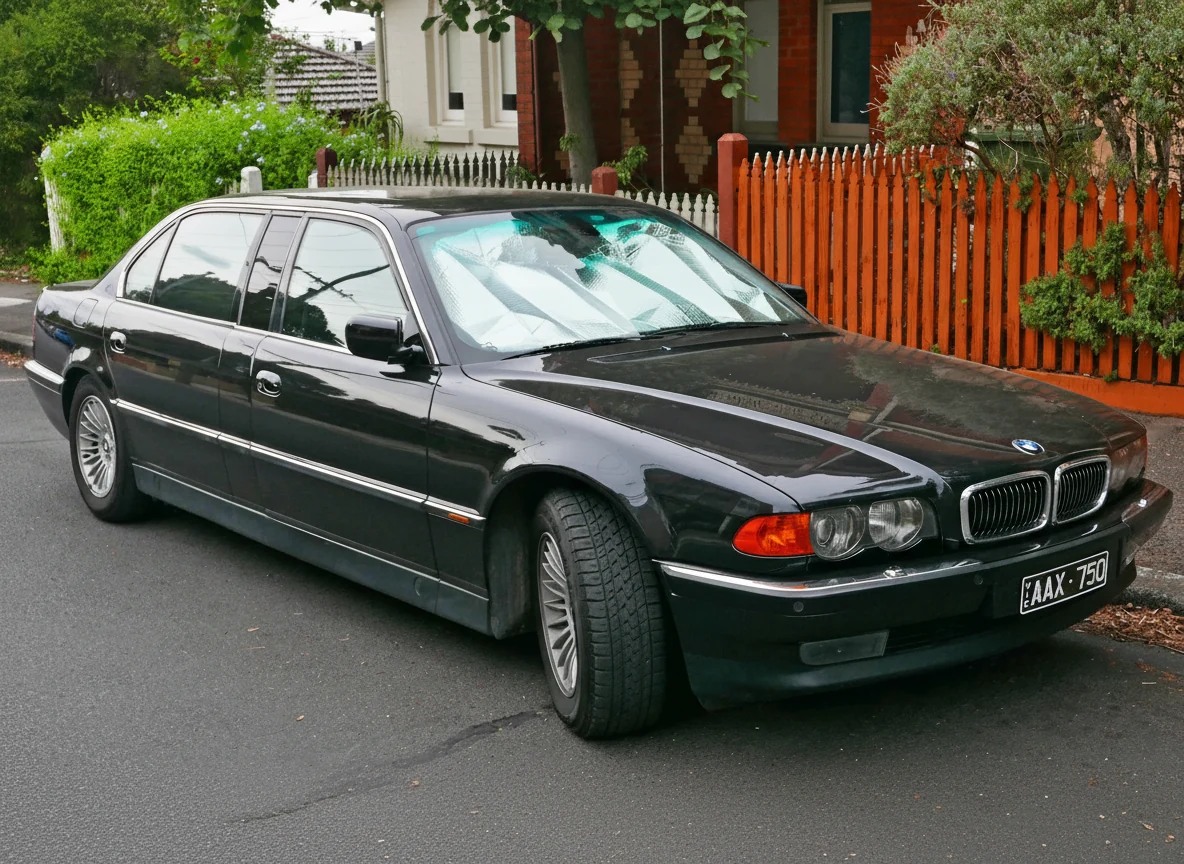
In 2002, with the arrival of the fourth-generation 7 Series, the order of letters in the name was reversed. While the car had previously been known as the 750iL, the new designation became 750Li. No deeper explanation than the marketing department simply preferring it that way has been found.
Similarly, with the introduction of the electronically controlled all-wheel drive system xDrive during the lifecycle of the first-generation BMW X5 E53, the letter X was abandoned — the letter that had previously been used, for example, on the E30 and E34 (e.g. BMW 525ix E34) to denote purely mechanical all-wheel drive. The presence of the xDrive system on early-generation BMW X5 and X3 models was indicated only by a sticker on the wings.
From 2010 – The Power Index
After 2010 came the era of mass deployment of turbocharged engines, hybrid drivetrains and electric vehicles. BMW symbolically "ran out of E codes" during this period. At the same time, it wanted to signal a transition into a new era, and so decided to abandon the established E designation in favour of the letter F, later G (the current generation) and for some new derivatives even further internal designations such as U. Far more important than the body codes themselves, however, is the change in the meaning of the digits in model names. BMW even started communicating this openly: the last two digits in the designation are no longer meant to indicate engine displacement in litres (author's note: which, as we have seen, they didn't manage to do anyway), but rather some kind of power rating in kW — a "virtual displacement", as BMW themselves called it.
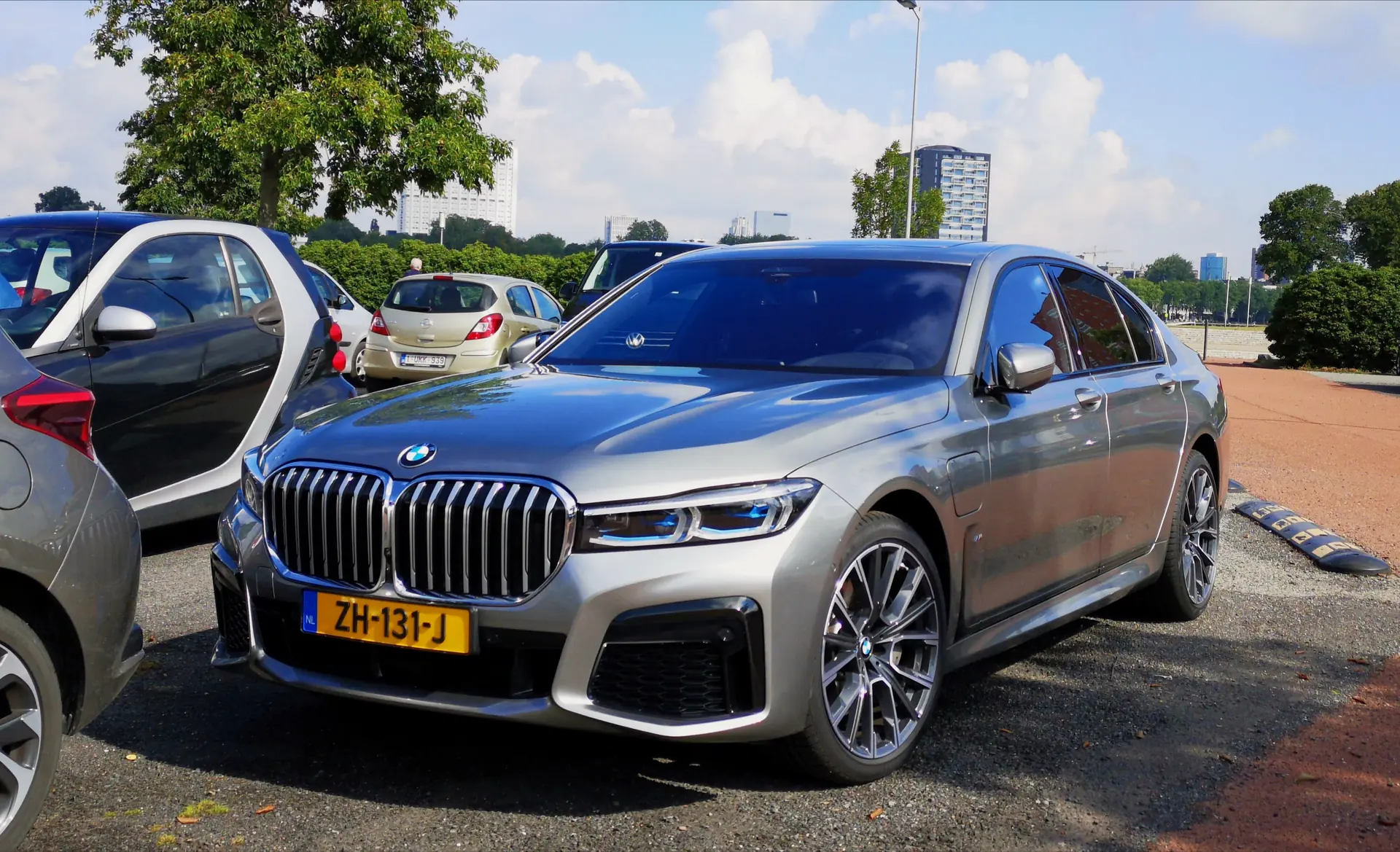
Specifically, for example, the BMW 745e — a plug-in hybrid in the 7 Series — no longer contains a 4.5-litre engine. According to BMW's official definition on their website, the number "45" means the car falls within a power range of 300–350 kW (approximately 407–475 hp). The letter e denotes hybrid drive, d continues to mean diesel, and traditional suffixes such as i (petrol) and xDrive remain. This shift relates to the fact that with the widespread adoption of turbocharging, a relatively small engine can today deliver power previously reserved for engines with significantly larger displacement — which definitively broke the original displacement-based naming system. BMWBLOG summarises it thus: "With the widespread use of turbochargers, the last two digits stopped reliably indicating engine displacement. Newer models like the 335i, 530i or M550i now have only a minimal relationship to their actual engine."
It is somewhat paradoxical that even this new "performance-based" system has its own inconsistencies. For example, the aforementioned BMW 745e xDrive (G11, 2019 facelift) achieves a combined output of approximately 290 kW (394 PS), which according to the previously announced rules would correspond more to the lower power band ("40" ≈ 250–300 kW), not "45". Yet it was officially sold as the 745e. It is thus evident that BMW shifts the goalposts here too, using designations in a somewhat optimistic manner — much as it previously rounded engine displacements "upwards".
The already-mentioned designation for electronically controlled all-wheel drive, xDrive, sometimes randomly moved to the front of the model name in the case of X-models (SUVs). The marketing department intervened once again, however, with the argument that it would be useful to unambiguously distinguish whether a particular model has all-wheel drive or not. The designation sDrive was therefore introduced, informing buyers of single-axle drive. It would not be BMW if even this rule had no exceptions: this applies again exclusively to X-models (SUVs) and even there it has a further sub-exception — on sporting variants (not to be confused with full-blown M division cars), such as the M50i or M50d, this information is not included in the name at all. Another flaw in this "rule" is the fact that the BMW E70 was produced before the term sDrive even existed — perhaps partly for this reason it appears somewhat "off-system" today.
Conclusion
BMW likes to present itself as a brand with a long and clear tradition of consistent model naming. A look at history, however, reveals the exact opposite: repeated changes of rules, numerous exceptions, marketing shortcuts and creative interpretation of its own conventions.
BMW never named its cars primarily to make them easily and unambiguously readable for enthusiasts or technically minded customers. It named them to sell well. And if there is one thing this history clearly proves, it is that consistency has always come second — right after marketing.
Comparison Table: Model Name vs. Engine Displacement
| Model | Engine | Name match |
|---|---|---|
| 518 | 1 773 cc = 1.8 L | |
| 520/520i | 1 990 cc = 2.0 L | |
| 520/6 | 1 991 cc = 2.0 L | |
| 525 | 2 494 cc = 2.5 L | |
| 528/528i | 2 788 cc = 2.8 L | |
| 530/530i | 2 986 cc = 3.0 L | |
| 533i | 3 210 cc = 3.2 L | |
| M535i | 3 453 cc = 3.5 L |
| Model | Engine | Name match |
|---|---|---|
| 315 | 1 573 cc = 1.6 L | |
| 316 (1975-1980) | 1 573 cc = 1.6 L | |
| 316 (1980-1982) | 1 766 cc = 1.8 L | |
| 318/318i | 1 766 cc = 1.8 L | |
| 320/320i (M10) | 1 990 cc = 2.0 L | |
| 320/6 (M20) | 1 990 cc = 2.0 L | |
| 320i US (M10 1977-1979) | 1 990 cc = 2.0 L | |
| 320i US (M10 1980-1983) | 1 766 cc = 1.8 L | |
| 323i | 2 316 cc = 2.3 L |
| Model | Engine | Name match |
|---|---|---|
| 628CSI | 2 788 cc = 2.8 L | |
| 630CS | 2 986 cc = 3.0 L | |
| 633CSi | 3 210 cc = 3.2 L | |
| 635CSi | 3 430 cc = 3.4 L | |
| M635CSi / M6 (US) | 3 453 cc = 3.5 L |
| Model | Engine | Name match |
|---|---|---|
| 725/725i | 2 494 cc = 2.5 L | |
| 728/728i | 2 788 cc = 2.8 L | |
| 730 | 2 986 cc = 3.0 L | |
| 732i | 3 210 cc = 3.2 L | |
| 733i | 3 210 cc = 3.2 L | |
| 735i | 3 430 cc = 3.4 L | |
| 745i (EU M102 Turbo) | 3 210 cc = 3.2 L | |
| 745i (EU M108 Turbo) | 3 430 cc = 3.4 L | |
| 745i (SA M88/3) | 3 453 cc = 3.5 L |
| Model | Engine | Name match |
|---|---|---|
| 518/518i | 1 766 cc = 1.8 L | |
| 520i | 1 991 cc = 2.0 L | |
| 525i | 2 494 cc = 2.5 L | |
| 525e (ETA) | 2 693 cc = 2.7 L | |
| 528e (ETA) | 2 693 cc = 2.7 L | |
| 528i | 2 788 cc = 2.8 L | |
| 533i | 3 210 cc = 3.2 L | |
| 535i | 3 430 cc = 3.4 L | |
| M535i | 3 430 cc = 3.4 L | |
| 524d/td | 2 443 cc = 2.4 L |
| Model | Engine | Name match |
|---|---|---|
| 316 | 1 766 cc = 1.8 L | |
| 316i | 1 596 cc = 1.6 L | |
| 318i | 1 766 cc = 1.8 L | |
| 318is | 1 766 cc = 1.8 L | |
| 320i | 1 991 cc = 2.0 L | |
| 323i | 2 316 cc = 2.3 L | |
| 325 / 325e / 325es | 2 693 cc = 2.7 L | |
| 325i / 325is / 325ix | 2 494 cc = 2.5 L | |
| 324d/td | 2 443 cc = 2.4 L |
| Model | Engine | Name match |
|---|---|---|
| 730i | 2 997 cc = 3.0 L | |
| 735i | 3 430 cc = 3.4 L | |
| 740i | 3 982 cc = 4.0 L | |
| 750i | 4 988 cc = 5.0 L |
| Model | Engine | Name match |
|---|---|---|
| 518i | 1 766 cc = 1.8 L | |
| 520i / 520iS | 1 991 cc = 2.0 L | |
| 525i | 2 494 cc = 2.5 L | |
| 530i | 2 997 cc = 3.0 L | |
| 535i / 535iS | 3 430 cc = 3.4 L | |
| 540i | 3 982 cc = 4.0 L | |
| 524td | 2 443 cc = 2.4 L | |
| 525td/tds | 2 497 cc = 2.5 L |
| Model | Engine | Name match |
|---|---|---|
| 840Ci (M60) | 3 982 cc = 4.0 L | |
| 840Ci (M62) | 4 398 cc = 4.4 L | |
| 850i/Ci (M70) | 4 988 cc = 5.0 L | |
| 850Ci (M73) | 5 379 cc = 5.4 L | |
| 850CSi (S70) | 5 576 cc = 5.6 L |
| Model | Engine | Name match |
|---|---|---|
| 316i | 1 596 cc = 1.6 L | |
| 318i | 1 796 cc = 1.8 L | |
| 318is (M42) | 1 796 cc = 1.8 L | |
| 318is (M44) | 1 895 cc = 1.9 L | |
| 320i | 1 991 cc = 2.0 L | |
| 323i | 2 494 cc = 2.5 L | |
| 325i | 2 494 cc = 2.5 L | |
| 328i | 2 793 cc = 2.8 L | |
| 318tds | 1 665 cc = 1.7 L | |
| 325td / 325tds | 2 497 cc = 2.5 L |
| Model | Engine | Name match |
|---|---|---|
| 1.8 | 1 796 cc = 1.8 L | |
| 1.8 | 1 895 cc = 1.9 L | |
| 1.9 / 1.9i | 1 895 cc = 1.9 L | |
| 2.0 | 1 991 cc = 2.0 L | |
| 2.2i | 2 171 cc = 2.2 L | |
| 2.3 | 2 494 cc = 2.5 L | |
| 2.5i | 2 494 cc = 2.5 L | |
| 2.8 | 2 793 cc = 2.8 L | |
| 3.0i | 2 979 cc = 3.0 L |
| Model | Engine | Name match |
|---|---|---|
| 728i | 2 793 cc = 2.8 L | |
| 730i | 2 997 cc = 3.0 L | |
| 735i | 3 498 cc = 3.5 L | |
| 740i (M60) | 3 982 cc = 4.0 L | |
| 740i (M62) | 4 398 cc = 4.4 L | |
| 750i | 5 379 cc = 5.4 L | |
| 725tds | 2 497 cc = 2.5 L | |
| 730d | 2 926 cc = 2.9 L | |
| 740d | 3 901 cc = 3.9 L |
| Model | Engine | Name match |
|---|---|---|
| 520i (M52) | 1 991 cc = 2.0 L | |
| 520i (M54) | 2 171 cc = 2.2 L | |
| 523i | 2 494 cc = 2.5 L | |
| 525i | 2 494 cc = 2.5 L | |
| 528i | 2 793 cc = 2.8 L | |
| 530i | 2 979 cc = 3.0 L | |
| 535i | 3 498 cc = 3.5 L | |
| 540i | 4 398 cc = 4.4 L | |
| 520d | 1 951 cc = 2.0 L | |
| 525d | 2 497 cc = 2.5 L | |
| 525td/tds | 2 497 cc = 2.5 L | |
| 530d | 2 926 cc = 2.9 L |
| Model | Engine | Name match |
|---|---|---|
| 316i (M43) | 1 895 cc = 1.9 L | |
| 316i (N40) | 1 596 cc = 1.6 L | |
| 316i (N42/N46) | 1 796 cc = 1.8 L | |
| 318i (M43) | 1 895 cc = 1.9 L | |
| 318i (N42/N46) | 1 995 cc = 2.0 L | |
| 320i (M52) | 1 990 cc = 2.0 L | |
| 320i (M54) | 2 171 cc = 2.2 L | |
| 323i | 2 494 cc = 2.5 L | |
| 325i | 2 494 cc = 2.5 L | |
| 328i | 2 793 cc = 2.8 L | |
| 330i | 2 979 cc = 3.0 L | |
| 318d | 1 951 cc = 2.0 L | |
| 320d | 1 995 cc = 2.0 L | |
| 330d (M57) | 2 926 cc = 2.9 L | |
| 330d (M57TÜ) | 2 993 cc = 3.0 L |
| Model | Engine | Name match |
|---|---|---|
| 3.0i | 2 979 cc = 3.0 L | |
| 4.4i | 4 398 cc = 4.4 L | |
| 4.6is | 4 619 cc = 4.6 L | |
| 4.8is | 4 799 cc = 4.8 L | |
| 3.0d (M57) | 2 926 cc = 2.9 L | |
| 3.0d (M57TÜ) | 2 993 cc = 3.0 L |
| Model | Engine | Name match |
|---|---|---|
| 730i | 3.0 L | |
| 735i | 3.6 L | |
| 740i | 4.0 L | |
| 745i | 4.4 L | |
| 750i | 4.8 L | |
| 760i | 6.0 L | |
| 730d | 3.0 L | |
| 740d | 3.9 L | |
| 745d | 4.4 L |
| Model | Engine | Name match |
|---|---|---|
| 2.0i | 2.0 L | |
| 2.2i | 2.2 L | |
| 2.5i / 2.5si | 2.5 L | |
| 3.0i / 3.0si | 3.0 L |
| Model | Engine | Name match |
|---|---|---|
| 520i (M54) | 2.2 L | |
| 520i (N46 / N43) | 2.0 L | |
| 523i | 2.5 L | |
| 525i (M54 / N52) | 2.5 L | |
| 525i (N53) | 3.0 L | |
| 528i | 3.0 L | |
| 530i | 3.0 L | |
| 535i | 3.0 L | |
| 540i | 4.0 L | |
| 545i | 4.4 L | |
| 550i | 4.8 L | |
| 520d | 2.0 L | |
| 525d (2004-2007) | 2.5 L | |
| 525d (2007-2010) | 3.0 L | |
| 530d | 3.0 L | |
| 535d | 3.0 L |
| Model | Engine | Name match |
|---|---|---|
| 630Ci | 3.0 L | |
| 630i | 3.0 L | |
| 645Ci | 4.4 L | |
| 650i | 4.8 L | |
| 635d | 3.0 L |
| Model | Engine | Name match |
|---|---|---|
| 2.0i / xDrive20i | 2.0 L | |
| 2.5i / xDrive25i | 2.5 L | |
| 3.0i / xDrive30i | 3.0 L | |
| xDrive18d | 2.0 L | |
| 2.0d / xDrive20d | 2.0 L | |
| 3.0d / xDrive30d | 3.0 L | |
| xDrive35d | 3.0 L |
| Model | Engine | Name match |
|---|---|---|
| 116i (N45 / N43) | 1.6 L | |
| 116i (N43) | 2.0 L | |
| 118i | 2.0 L | |
| 120i | 2.0 L | |
| 125i | 3.0 L | |
| 128i | 3.0 L | |
| 130i | 3.0 L | |
| 135i / 135is | 3.0 L | |
| 116d | 2.0 L | |
| 118d | 2.0 L | |
| 120d | 2.0 L | |
| 123d | 2.0 L |
| Model | Engine | Name match |
|---|---|---|
| 316i | 1.6 L | |
| 318i | 2.0 L | |
| 320i / 320si | 2.0 L | |
| 323i | 2.5 L | |
| 325i (N52) | 2.5 L | |
| 325i (N53) | 3.0 L | |
| 328i | 3.0 L | |
| 330i | 3.0 L | |
| 335i | 3.0 L | |
| 316d | 2.0 L | |
| 318d | 2.0 L | |
| 320d | 2.0 L | |
| 325d | 3.0 L | |
| 330d | 3.0 L | |
| 335d | 3.0 L |
| Model | Engine | Name match |
|---|---|---|
| 3.0si / xDrive30i | 3.0 L | |
| xDrive35i | 3.0 L | |
| 4.8i / xDrive48i | 4.8 L | |
| xDrive50i | 4.4 L | |
| 3.0d / xDrive30d | 3.0 L | |
| xDrive35d | 3.0 L | |
| xDrive40d | 3.0 L | |
| M50d | 3.0 L |
| Model | Engine | Name match |
|---|---|---|
| xDrive35i | 3.0 L | |
| xDrive50i | 4.4 L | |
| xDrive30d | 3.0 L | |
| xDrive35d | 3.0 L | |
| xDrive40d | 3.0 L | |
| M50d | 3.0 L |
| Model | Engine | Name match |
|---|---|---|
| 730i | 3.0 L | |
| 740i | 3.0 L | |
| 750i | 4.4 L | |
| 760i | 6.0 L | |
| 730d | 3.0 L | |
| 740d | 3.0 L | |
| 750d | 3.0 L |
| Model | Engine | Name match |
|---|---|---|
| sDrive18i | 2.0 L | |
| sDrive20i | 2.0 L | |
| sDrive23i | 2.5 L | |
| sDrive28i | 2.0 L | |
| sDrive30i | 3.0 L | |
| sDrive35i / sDrive35is | 3.0 L |
| Model | Engine | Name match |
|---|---|---|
| sDrive16i | 1.6 L | |
| sDrive18i | 2.0 L | |
| sDrive20i | 2.0 L | |
| sDrive28i | 2.0 L | |
| xDrive25i | 3.0 L | |
| xDrive28i (N52) | 3.0 L | |
| xDrive28i (N20) | 2.0 L | |
| xDrive35i | 3.0 L | |
| sDrive16d | 2.0 L | |
| sDrive18d | 2.0 L | |
| sDrive20d / xDrive20d | 2.0 L | |
| xDrive25d | 2.0 L |
| Model | Engine | Name match |
|---|---|---|
| 520i | 2.0 L | |
| 523i (N52) | 2.5 L | |
| 523i (N53) | 3.0 L | |
| 528i (N53 / N52) | 3.0 L | |
| 528i (N20) | 2.0 L | |
| 530i | 3.0 L | |
| 535i | 3.0 L | |
| 550i | 4.4 L | |
| 518d | 2.0 L | |
| 520d | 2.0 L | |
| 525d (N57) | 3.0 L | |
| 525d (N47) | 2.0 L | |
| 530d | 3.0 L | |
| 535d | 3.0 L | |
| M550d | 3.0 L |
| Model | Engine | Name match |
|---|---|---|
| 640i | 3.0 L | |
| 650i | 4.4 L | |
| 640d | 3.0 L |
| Model | Engine | Name match |
|---|---|---|
| sDrive20i / xDrive20i | 2.0 L | |
| xDrive28i (N52) | 3.0 L | |
| xDrive28i (N20) | 2.0 L | |
| xDrive35i | 3.0 L | |
| sDrive18d | 2.0 L | |
| xDrive20d | 2.0 L | |
| xDrive28d | 2.0 L | |
| xDrive30d | 3.0 L | |
| xDrive35d | 3.0 L |
| Model | Engine | Name match |
|---|---|---|
| 316i | 1.6 L | |
| 318i | 1.5 L | |
| 320i | 2.0 L | |
| 328i | 2.0 L | |
| 330i | 2.0 L | |
| 335i | 3.0 L | |
| 340i | 3.0 L | |
| 316d | 2.0 L | |
| 318d | 2.0 L | |
| 320d | 2.0 L | |
| 325d | 2.0 L | |
| 330d | 3.0 L | |
| 335d | 3.0 L |
| Model | Engine | Name match |
|---|---|---|
| 116i | 1.6 L | |
| 118i | 1.6 L | |
| 120i | 2.0 L | |
| 125i | 2.0 L | |
| 135i | 3.0 L | |
| M135i | 3.0 L | |
| 116d | 2.0 L | |
| 118d | 2.0 L | |
| 120d | 2.0 L | |
| 125d | 2.0 L |
| Model | Engine | Name match |
|---|---|---|
| sDrive25d / xDrive25d | 2.0 L | |
| xDrive30d | 3.0 L | |
| xDrive35i | 3.0 L | |
| xDrive40d | 3.0 L | |
| xDrive50i | 4.4 L | |
| M50d | 3.0 L |
| Model | Engine | Name match |
|---|---|---|
| xDrive30d | 3.0 L | |
| xDrive35i | 3.0 L | |
| xDrive40d | 3.0 L | |
| xDrive50i | 4.4 L | |
| M50d | 3.0 L |
| Model | Engine | Name match |
|---|---|---|
| 218i | 1.5 L | |
| 220i | 2.0 L | |
| 228i | 2.0 L | |
| 230i | 2.0 L | |
| M235i / M240i | 3.0 L | |
| 218d | 2.0 L | |
| 220d | 2.0 L | |
| 225d | 2.0 L |
| Model | Engine | Name match |
|---|---|---|
| 418i | 1.5 L | |
| 420i | 2.0 L | |
| 428i | 2.0 L | |
| 430i | 2.0 L | |
| 435i | 3.0 L | |
| 440i | 3.0 L | |
| 418d | 2.0 L | |
| 420d | 2.0 L | |
| 425d | 2.0 L | |
| 430d | 3.0 L | |
| 435d | 3.0 L |
| Model | Engine | Name match |
|---|---|---|
| 218i | 1.5 L | |
| 220i | 2.0 L | |
| 225i | 2.0 L | |
| 218d | 2.0 L | |
| 220d | 2.0 L | |
| 225xe | 1.5 L hybrid |
| Model | Engine | Name match |
|---|---|---|
| sDrive18i | 1.5 L | |
| sDrive20i / xDrive20i | 2.0 L | |
| xDrive25i | 2.0 L | |
| sDrive16d | 1.5 L | |
| sDrive18d / xDrive18d | 2.0 L | |
| sDrive20d / xDrive20d | 2.0 L | |
| xDrive25d | 2.0 L |
| Model | Engine | Name match |
|---|---|---|
| xDrive20i | 2.0 L | |
| xDrive28i | 2.0 L | |
| xDrive35i | 3.0 L | |
| xDrive20d | 2.0 L | |
| xDrive30d | 3.0 L | |
| xDrive35d | 3.0 L |
Although I excluded G and U codes from the listing, I still carried out the comparison. Interestingly, G-code models tend to be more accurate than F-code ones.
| Name-to-displacement accuracy by era: | |||||||||||||||||||||||||||||||||||||||||||||||||||||||||||||||||||||||||||||||||||||||||||||||||||
|---|---|---|---|---|---|---|---|---|---|---|---|---|---|---|---|---|---|---|---|---|---|---|---|---|---|---|---|---|---|---|---|---|---|---|---|---|---|---|---|---|---|---|---|---|---|---|---|---|---|---|---|---|---|---|---|---|---|---|---|---|---|---|---|---|---|---|---|---|---|---|---|---|---|---|---|---|---|---|---|---|---|---|---|---|---|---|---|---|---|---|---|---|---|---|---|---|---|---|---|
| E** codes: | approx. 58% | ||||||||||||||||||||||||||||||||||||||||||||||||||||||||||||||||||||||||||||||||||||||||||||||||||
| G** codes: | approx. 25% | ||||||||||||||||||||||||||||||||||||||||||||||||||||||||||||||||||||||||||||||||||||||||||||||||||
| F** codes: | approx. 23% | ||||||||||||||||||||||||||||||||||||||||||||||||||||||||||||||||||||||||||||||||||||||||||||||||||
| U** codes: | 0% | ||||||||||||||||||||||||||||||||||||||||||||||||||||||||||||||||||||||||||||||||||||||||||||||||||
| Overall accuracy: 26.6% | |||||||||||||||||||||||||||||||||||||||||||||||||||||||||||||||||||||||||||||||||||||||||||||||||||
Sources:
- Archived official BMW statement on model naming (2021–2025)
- Overview of BMW brand history
- BMW Dixi
- Automobilwerk Eisenach factory
- Eisenacher Motorenwerk
- BMW 3/15 PS – BMW's first car, derived from the Austin 7
- BMW 3/20 PS – the first car fully developed by BMW
- BMW 319 – six-cylinder with 1.9-litre displacement
- BMW 303 – BMW's first six-cylinder engine (1.2 litres)
- BMW 329 – variant with 1.9-litre six-cylinder
- BMW Neue Klasse and the transition to the 02 series, including codes E10/E20
- BMW E23 745i – 3.2L turbo engine and naming history
- BMW E28 – 5 Series, including the 533i with a 3.2L engine
- BMW E34 – overview of all models and engines (incl. 540i and M5)
- BMW E36 – overview of all models and engines
- BMW E39 – 530d specifications with 2.9L engine
- BMW E46 – development and engine changes of the 320i (2.0L and 2.2L)
- BMW E65 – 750i specifications with 4.8L V8
- BMW Z3 – Z3 2.3 engine specifications (2.5L)
- M60 engine – use in the 730i V8 (E32)
- M88 engine – use in the South African 745i SA
- BMW G11 745e – power specifications 290 kW
- BMW Blog – detailed breakdown of BMW naming history
Image Sources and Licensing
Images used in this article originate from Wikimedia Commons and are distributed under Creative Commons licences (primarily CC BY and CC BY-SA), unless otherwise stated for a specific image.